Friday, 30 April 2021

Ingenuity Completes Its Fourth Flight And Gets an Exciting New Mission

After proving powered, controlled flight is possible on the Red Planet, NASA’s Mars Ingenuity helicopter has new orders: scout ahead of the Perseverance rover to assist in its search for past signs of microbial life.


The next phase extends the rotocraft’s mission beyond the original month-long technology demonstration. Now, the goal is to assess how well flyers can help future exploration of Mars and other worlds.

“We’re going to gather information on the operational support capability of the helicopter while Perseverance focuses on its science mission,” Lori Glaze, director of NASA’s Planetary Science Division, told reporters Friday.

The type of reconnaissance that Ingenuity performs could one day also prove useful to human missions, by scoping out the best paths for explorers to traverse, and reaching locations that aren’t otherwise possible.

The four-pound (1.8 kilogram) mini chopper successfully performed the fourth of its five originally planned flights on Friday, “going farther & faster than ever before,” NASA tweeted.

The fifth is planned in the coming days, then its mission will be extended, initially by one Martian month. 

Whether it continues beyond that will depend on if it’s still in good shape and if it’s helping, rather than hindering, the rover’s goals of collecting soil and rock samples for future lab analysis on Earth. 


Chief engineer Bob Balaram predicted a limiting factor will be its ability to withstand the frigid Mars nights, where temperatures plunge to minus 130 degrees Fahrenheit (minus 90 degrees Celsius). 

Ingenuity keeps warm with a solar-powered heater, but it was only designed to last for a month and engineers aren’t sure “how many freeze and thaw cycles (it) can go through before something breaks,” he said.

NASA initially thought Perseverance would be driving away from the site where it landed at the Jezero Crater on February 18, just north of the planet’s equator.

That would have meant the rover leaving Ingenuity behind and moving beyond communications range. 

Now though, the agency wants to keep Perseverance in the area for some time after finding a rocky outcrop that they believe contains some of the oldest material on the crater floor. 

They hope to collect their first sample in July. 

Ingenuity’s exploits have captured the public’s imagination since it made its first flight on April 19, but NASA said this wasn’t a factor in its decision to allow the two robots to keep exploring Mars together.

“We really wish to spend a considerable amount of time where we are and so it’s sort of a fortuitous alignment,” said Perseverance project scientist Ken Farley. 

© Agence France-Presse


Source link

The post Ingenuity Completes Its Fourth Flight And Gets an Exciting New Mission appeared first on Chop News.


from Chop News https://ift.tt/3e4Tnd5

NASA tells SpaceX to halt lunar lander work pending contract challenges

In this handout provided by NASA, Acting NASA Administrator Steve Jurczyk watches the launch of a SpaceX Falcon 9 rocket from the balcony of Operations Support Building II carrying the company’s Crew Dragon spacecraft on NASAs SpaceX Crew-2 mission with NASA astronauts Shane Kimbrough and Megan McArthur, ESA (European Space Agency) astronaut Thomas Pesquet, and Japan Aerospace Exploration Agency (JAXA) astronaut Akihiko Hoshide onboard on April 23, 2021 at NASA’s Kennedy Space Center in Cape Canaveral, Florida.

NASA | Getty Images

U.S. space agency NASA has told Elon Musk’s SpaceX to halt work under a contract it won to develop a lunar spacecraft, pending the outcome of challenges by rival bidders at the U.S. Government Accountability Office, the agency said on Friday.

NASA’s decision means SpaceX has to stop any work specifically related to the moon program contract until the GAO makes a ruling, expected Aug. 4 at the latest.

A SpaceX spokesman did not immediately respond to a request for comment.

Earlier this month, NASA awarded SpaceX the lunar contract over billionaire Jeff Bezos’ Blue Origin and defense contractor Dynetics.

The high-profile project aims to put humans back on the moon for the first time since 1972.

Blue Origin on Monday filed a protest with the GAO, arguing among other things that NASA gave SpaceX the chance to revise its bid but did not give that chance to Blue Origin.

Blue Origin also argues the decision extends SpaceX’s “monopolistic” control in space exploration.

The GAO confirmed that Dynetics has also challenged the NASA contract award to SpaceX.

“Pursuant to the GAO protests, NASA instructed SpaceX that progress on the HLS (human landing system) contract has been suspended until GAO resolves all outstanding litigation related to this procurement,” the agency said on Friday.

Source link

The post NASA tells SpaceX to halt lunar lander work pending contract challenges appeared first on Chop News.


from Chop News https://ift.tt/3t5Srti

How UK-based Lendable is powering fintechs across emerging markets – TechCrunch

What moves the needle for digital lenders is serving loans to their respective customers. But where does this money come from? The pool is usually equity or debt. While some lenders use the former, it can be seen as folly because, over time, the founders tend to lose ownership of their businesses after giving out too much equity to raise capital for loans. Hence the reason why most lending companies secure debt facilities. 

TechCrunch has recently reported on two prominent digital lenders (also digital banks in their own rights) gaining steam in Africa — Carbon and FairMoney. In 2019, Carbon secured $5 million in debt financing and the following year, FairMoney did the same but raised a higher sum, $13 million.

Enter Lendable, the UK-based firm responsible for supplying both lenders with debt finance.

The company with offices in Nairobi, New York, and Singapore advances loans to fintechs across eight markets in Africa, Southeast Asia, and Latin America. Since launching in 2014, the company has disbursed over $125 million to these fintechs — SME lenders, payment platforms, asset lenders, marketplaces, and consumer lenders.

In a phone conversation with TechCrunch, Samuel Eyob, a principal at the firm, said the company is raising almost $180 million to continue its investment efforts across the three continents.

“We want to raise more than $180 million and we have investors that have committed cash to us,” he said. “Right now, we’re already investing out of that amount because we’ve already closed on a bunch of it. Ideally, the goal is to invest that amount over this year.”

Lendable was founded by Daniel Goldfarb and Dylan Friend. It was based on an insight that they had while Daniel was a partner at Greenstart, a venture capital firm focused on data, finance and energy. That insight was that the poorest people in the world pay the most for goods and services, so if capital markets could provide a path to ownership, that could help individuals build assets. So the pair set out to solve this by providing capital to fintechs catering to the needs of these people.

Eyob, a first-generation American from Ethiopia, knows what a lack of access to fair finance does to people and countries. Given the millions of people and businesses not effectively served by banks and MFIs, Eyob joined the team to drive financial inclusion in these markets

“Over a billion people still lack access to financial services and multiple reports indicate that the financing gap for micro and small businesses is trillions of dollars and growing. We believe this is a massive opportunity. So, whilst we started in Africa, the lack of access to fair financing solutions is a problem across all emerging markets, which we want to address,” he said.

Samuel Eyob

Samuel Eyob (Principal, Lendable)

So in 2014, Lendable started as a SaaS platform to democratize access to African capital markets by providing risk and analytics software. “We hoped to do this by bringing the securitization market from the Global North into Africa,” Eyob added

The company built an analytics platform to analyze loans and used machine learning to predict loan portfolio cashflows. In addition to that, they created an automated investment platform helping ventures to raise nondilutive (not equity) capital to help scale their businesses.

After sufficiently proving out its tech, the firm made a pivot. According to Eyob, the previous model wasn’t experiencing enough growth and was incurring unsustainable costs. So the company began raising capital based on its own analytics in 2016. It had only raised $600,000 and was focused on East African startups with SME financing and Pay-Go solar home models. That number has since increased to over $125 million across Africa, Southeast Asia and Latin America.

So why do these companies actually need debt financing? Here’s a clearer picture of the instance used at the beginning of this piece.

Imagine a VC-backed startup whose ultimate goal is to help scale up female-founded SMEs with one-year loans. The startup could easily use its equity to provide the capital for all the one-year loans. The payoff from the loans, after one year, would be the interest due to them. Or, it could put that capital into hiring developers, build a go-to-market strategy, hire a CTO, all of which would likely have payoffs that are up to a 100x multiple of the interest they would have made on the single SME loan that is tied up for an entire year.

So ultimately, debt would be an ideal source of nondilutive capital for the startup as they wouldn’t have to tie up equity for one year. Therefore, debt would be a much cheaper source of capital to scale up their operations, especially if it has scaled up to having tens of thousands of one-year loans. If it were equity, they would have to raise an endless amount with constant dilution as they scale.

In its five years of official operations, Lendable has given debt facilities to more than 20 startups. While the stage at which Lendable gives money differs, it is particular about startups that are post Series A. 

Apart from Carbon and FairMoney, some startups to have raised debt from Lendable include Tugende, Uploan, KoinWorks, Planet42, TerraPay, Watu Credit, Trella, Amartha, Payjoy, Solar Panda, Cars45 and MFS Africa. Collectively, Eyob said, Lendable has reached 1.2 million end borrowers through its partners and helped finance up to 290,000 SMEs.

Of the $125 million disbursed so far as debt, Eyob said the company has a default rate of about 0.01%. The reason behind this low number, Eyob reckons, is because Lendable ensures to be in constant conversation with the companies offering help, advice or connections when necessary.

“We view lending as a partnership and typically when both parties act in good faith, there are ways to solve problems,” Eyob said

The debt facilities start at $2 million but can go up to over $15 million, Eyob said. But while the global standard at which lenders pay back their debt investments is typically 4 to 6 years, Lendable expects the companies it gives cash to do so in 3 to 4 years

Eyob pushes that founders in emerging markets should be willing to take more debt financing to scale their startups. These days, startups tend to be high on giving out equity instead of weighing options on effectively using debt in critical points when scaling.

Equity could be used to help attract the best talent or expand into new markets. Still, debt proves essential when scaling up capital-intensive operations like working capital or pre-funding activities. More often than not, debt and equity are complementary to one another, and Lendable is hoping to use the new funds it’s raising to push that notion

I think, just like everywhere else in the world, debt and equity are tools that should be used to support one another, supporting the venture’s ultimate mission. We have lasting relationships with multiple VC teams across emerging markets that we work with to ultimately support one another’s partner investees.”


Source link

The post How UK-based Lendable is powering fintechs across emerging markets – TechCrunch appeared first on Chop News.


from Chop News https://ift.tt/3nNAAX7

Did you know the Naga Chaitanya starrer will be the first film to feature Raashii Khanna’s real voice?

Did you know the Naga Chaitanya starrer will be the first film to feature Raashii Khanna's real voice?

Ready to be seen headlining some big projects in South cinema, Raashii Khanna has kicked off the shoot for Dil Raju’s upcoming Telugu film, Thank You, costarring Naga Chaitanya in Milan, Italy. What makes the movie special for the gorgeous actress is that it is the first film that shall feature her real voice as it’s being shot with a sync-sound setup. A sync-sound setup is one in which the sound of the film used during the shot makes it to the final edit and the actors don’t need to dub for their scenes separately. Also Read – Thank You: Raashi Khanna begins shooting for the first schedule of the Naga Chaitanya starrer in Milan — deets inside

Pumped about the challenge, Raashii Khanna shares, “This is the first time I am shooting for a Telugu film, which will be shot with this technique. People will hear my real voice and not a dubbed voice. It’s not easy to be shooting in such a set-up. I am nervous and excited because for the first time the audience will hear my voice over my face.” Also Read – Naga Chaitanya’s drool worthy pictures will definitely make your heart skip a beat

Produced by Dil Raju, Thank You is Raashii Khanna’s second collaboration with Naga Chaitanya Akkineni and director Vikram Kumar. On her way to leaving a mark across film industries of different languages, the versatile actor has an impressive slate of big-budget movies. Apart from Thank You, her upcoming projects include Tughlaq Durbar, Aranmanai 3, Methavi and Bhramam. Out of these, Aranmanai 3 is part of a super successful Tamil franchise that unveiled its first look recently. She also awaits the streaming of her digital debut directed by Raj & DK and starring Shahid Kapoor and Vijay Sethupathi. Also Read – Before tying the knot with Naga Chaitanya, Samantha Akkineni grabbed headlines for her alleged affair with THIS south star

Stay tuned to BollywoodLife for the latest scoops and updates from Bollywood, Hollywood, South, TV and Web-Series.
Click to join us on Facebook, Twitter, Youtube and Instagram.
Also follow us on Facebook Messenger for latest updates.


// jQuery(window).scroll(function(){ // if (isInView(jQuery('#live-blog-update'))){ // getMoreBlogEntries(); // } // });

$(document).ready(function(){ $('#commentbtn').on("click",function(){ (function(d, s, id) { var js, fjs = d.getElementsByTagName(s)[0]; if (d.getElementById(id)) return; js = d.createElement(s); js.id = id; js.src="https://connect.facebook.net/en_US/sdk.js#xfbml=1&version=v3.0&appId=179720252061082&autoLogAppEvents=1"; fjs.parentNode.insertBefore(js, fjs); }(document, 'script', 'facebook-jssdk'));

$(".cmntbox").toggle(); }); });

Source link

The post Did you know the Naga Chaitanya starrer will be the first film to feature Raashii Khanna’s real voice? appeared first on Chop News.


from Chop News https://ift.tt/3u88oR3

Grief and anger as Covid victims overwhelm Delhi’s crematoriums | Coronavirus

The bodies came, one after another, after another, after another. So many bodies that the ambulances and trucks carrying them into the crematorium blocked traffic.

In Delhi, a city where someone dies from Covid-19 every four minutes, every day is a battle not just for hospital beds but for a space to say goodbye to the dead with dignity.

The official capacity at the Ghazipur crematorium in east Delhi is 38 bodies, and before the pandemic, only once in living memory had all the funeral pyres been taken in one day. Now, as a deadly second coronavirus wave sweeps the capital, sometimes 150 bodies have already arrived by early morning. The staff have expanded operations into the car park, but its not nearly enough.

In India’s capital, the virus is showing no sign of abating. On Friday morning, Delhi registered another record-breaking 395 deaths, and 24,235 cases. Across India, the total number of new confirmed new cases was 386,693, another global record. Crematoriums are expanding at a rapid pace, attempting to increase capacity to cope with 1,000 cremations a day.

A mass cremation of Covid-19 victims is seen at Ghazipur cremation ground in New Delhi.
So many bodies are being given their late rites here that the air is pungent and sour, thick with the smoke of thousands of recent cremations. Photograph: Naveen Sharma/Sopa Images/Rex/Shutterstock

It is here, among the pyres that get rebuilt every day for the Hindu and Sikh last rites, that the devastation caused by Covid-19 in the capital is most viscerally felt. Most lost their lives because families could not get them a hospital bed, could not get them oxygen. Some got to hospitals only for the hospitals to run out of oxygen.

Sitting on the floor wearing PPE in the sweltering Delhi heat, sobbing into his hands and wiping sweat from his brow, Rakesh Kumar, 36, described how his family had driven to every hospital in Delhi and in the neighbouring city of Noida when his mother, Sumitra Devi, had begun to struggle for breath as her oxygen crashed. But the 56-year-old never got a bed, and she died on Thursday morning.

“We tried so many hospitals but even when her oxygen went down to 40% we could not get her a bed,” said Kumar. “We kept going to hospitals where we were told there was availability of beds but every time, the hospital said they were full. If we could have got her a bed or got her oxygen in time, we could have saved her. But she didn’t even get a chance to survive.”

Like many laying their dead to rest, he was angry. “The government has failed its citizens, why could it not give us the healthcare that we need?” said Kumar.

In his 30 years helping to cremate the dead, Sunil Kumar Sharma, who is the head of Ghazipur crematorium, said he had never imagined such scenes. “So many dead,” he said. “It feels like if this continues, there will be no one left in Delhi.”

India: drone footage shows makeshift mass crematorium in Delhi – video

Though there is supposed to be strict protocol on handling the bodies of coronavirus victims, Sharma said hospitals often sent corpses over without any protective wrapping, risking exposing his staff to the virus. Some families, he said, tried to hide that their relative had died of Covid-19.

“It’s been terrible here, and very scary,” said Sharma. “We work for 20 hours every day now. I am so tired and my soul feels broken by what is happening. People are now dumping the bodies and running away, so we have to perform the last rites instead so these bodies still have some dignity.”

The crematorium gets through 60 tonnes of wood per day. “At night, I worry about how we will handle tomorrow when more bodies come,” said Sharma. “What if there are just too many for us?”

With so many bodies being given their late rites, the air was pungent and sour, thick with the smoke of thousands of recent cremations. The smoky pyres of the day before were still scattered with some offerings, mangoes and pomegranates and bright orange holy flowers that lie in the ash; specks of life in the remnants of death. And there was grief – grief everywhere.

A woman in a dark green sari whispered prayers softly through the ambulance window, where inside her husband, who died that morning of Covid-19, lay wrapped in protective cloth. She tried to put a set of red bangles on his body, but was gently ushered away by a man in PPE trying to move the body.

Ajay Gupta howled in deep anguish as the body of his brother, JJ Ram, was brought into the crematorium and placed on to the pyre. Ram was finally admitted to hospital last week when he struggled to breathe, and had been making improvements, even video-calling Gupta from his bed. But according to the family, the hospital had run out of oxygen, and Ram had perished.

People wearing PPE carry the body of a family member who died of Covid-19, at Ghazipur cremation ground in New Delhi.
People wearing PPE carry the body of a family member who died of Covid-19, at Ghazipur cremation ground in New Delhi. Photograph: Naveen Sharma/Sopa Images/Rex/Shutterstock

“The staff told us just a couple of days ago he would be fine,” said Gupta. Gupta also fell victim to the ruthless market that has emerged in Delhi for oxygen and drugs such as remdesivir, which are sold to desperate family members at exorbitant prices.

Gupta said he had used every penny he had to buy remdesivir for his brother on the black market for 630,000 rupees (£6,100) – more than 10 times the market price – on instruction of hospital doctors, despite questions over its use in treating Covid-19 patients.

“I feel like everything has been destroyed and a hole has been torn in my heart,” said Gupta, who, like many, turned his ire towards the government of prime minister Narendra Modi. “The central government should be blamed for my brother’s death,” he said.

Narendra Kumar, a 26-year-old ambulance driver who picks up Covid bodies every day from homes and hospitals to bring to the crematoriums, also confirmed that most people he was seeing had died from lack of oxygen. “This is a terrible job,” said Kumar. “I am so scared of infecting my family that I don’t go home any more. At the end of the day I just park my ambulance outside Ganga Ram hospital and sleep there.”

Krishnan Pal, 48, who sold the popular Indian snack pani puri in his Delhi stall, was among those who died after repeatedly being turned away from overloaded hospitals when he was struggling to breathe. His cousin, Kali Charan Kashap, said they had tried every hospital in Delhi, but could not get a bed, so they drove him to Agra, a city in the neighbouring state of Uttar Pradesh. In Agra they were told that there were beds, but that hospitals had no oxygen. As they were driving to Bareilly, another city in Uttar Pradesh, Pal died.

“People are literally dying on the roads because they can’t breathe,” said Kashap, through choking sobs, as the family waited for Pal’s body to arrive from the morgue. “India needs oxygen so I ask this government – where is it?”

Relatives stand next to burning funeral pyres of those who died of coronavirus, at Ghazipur cremation ground in New Delhi.
Delhi’s crematoriums and graveyards will continue to bear the burden of death that shrouds the city every day. Photograph: Naveen Sharma/Sopa Images/Rex/Shutterstock

The political implications of the second coronavirus wave on Modi’s government are becoming apparent. According to the Global Leader Approval Tracker, Modi has suffered an unprecedented six-point drop in popularity in the past week, with his approval rating at its lowest ever – though still high at 67% – and his disapproval rating going up to 28%.

Many believe vaccines are the only long-term way out of India’s coronavirus crisis, but Delhi’s citizens were dealt a blow this week when the local government said plans to open up vaccinations to anyone aged 18 and over from Saturday were being delayed indefinitely because of a lack of supplies. Similar shortages are being experienced across India.

Though the Delhi state chief minister, Arvind Kejriwal, said authorities would make vaccines available “as soon as possible”, several private clinics in Delhi said they were not expecting stocks for at least another month or even two.

So for now, Delhi’s crematoriums and graveyards will continue to bear the burden of death that shrouds the city every day. At Ghazipur, as the sun set and all the pyres were finally assembled, they were set alight at the same time – going up in a fiery roar of heat and pain.

Source link

The post Grief and anger as Covid victims overwhelm Delhi’s crematoriums | Coronavirus appeared first on Chop News.


from Chop News https://ift.tt/3vyX3cO

Orange Cap and Purple Cap standings after PBKS vs RCB match (Updated)

KL Rahul has overtaken Shikhar Dhawan in the race to the IPL 2021 Orange Cap title. Courtesy of his 91-run knock against the Royal Challengers Bangalore on Friday, Rahul is now number one on the Orange Cap leaderboard, with 331 runs to his name in seven matches.

Shikhar Dhawan is right behind him with 311 runs, while Faf du Plessis, Sanju Samson and Prithvi Shaw are the other batters in the Top 5. Glenn Maxwell had an opportunity to sneak into the Top 5 last night in Ahmedabad, but he got out for a golden duck.

Even AB de Villiers could not improve his position in the standings after scoring just three runs versus the Punjab Kings. There are no other changes in the Top 10.

Harshal Patel continues to be at the helm of the IPL 2021 Purple Cap leaderboard (Image Courtesy: IPLT20.com)

Although he went wicketless against the Punjab Kings, Harshal Patel continues to be in the number one position on the Purple Cap leaderboard. Avesh Khan, Rahul Chahar, Chris Morris and Rashid Khan are behind him in the Top 5.

Kyle Jamieson’s two wickets against the Punjab Kings helped him attain the seventh rank while Mohammed Shami is eighth now with eight wickets in seven matches. Prasidh Krishna and Deepak Chahar hold the other two spots in the Top 10.


Punjab Kings rise to fifth place in the IPL 2021 points table

After registering their third win of IPL 2021, the Punjab Kings have climbed to the fifth position in the standings. Their net run rate of -0.264 has kept them below the Mumbai Indians.

Meanwhile, the Royal Challengers Bangalore have the same points as the Chennai Super Kings and the Delhi Capitals. However, their negative run rate has kept them in the number 3 position.

The next IPL 2021 match will feature the Mumbai Indians and the Chennai Super Kings. This game will take place on Saturday evening at the Arun Jaitley Stadium.

Published 30 Apr 2021, 23:58 IST


Source link

The post Orange Cap and Purple Cap standings after PBKS vs RCB match (Updated) appeared first on Chop News.


from Chop News https://ift.tt/2RfJ4tP

Medieval Skeletons Might Be Hiding a Cancer Rate Far Higher Than Expected

Cancer isn’t just a modern-day affliction. A new archaeological analysis suggests malignant growths in medieval Britain were not as rare as we once thought. 

Even before widespread smoking, the Industrial Revolution, and the modern surge in life expectancy, it seems cancer was still a leading cause of disease.


Scanning and X-raying 143 medieval skeletons from six cemeteries in and around the city of Cambridge, archaeologists have predicted cancer cases between the 6th and the 16th century were roughly a quarter of what they are today.

That’s 10 times higher than previous estimates, which had put cancer rates at less than one percent.

“Until now it was thought that the most significant causes of ill health in medieval people were infectious diseases such as dysentery and bubonic plague, along with malnutrition and injuries due to accidents or warfare,” says archaeologist Jenna Dittmar from Cambridge University.

“We now have to add cancer as one of the major classes of disease that afflicted medieval people.”

Past analyses of medieval skeletons in Britain have only focused on the exterior of the bone, but Dittmar and her colleagues decided to look for evidence of metastases within the bone, too. 

263379 webCT scan bone from a medieval skull with a white arrow showing metastasis. (Bram Mulder)

Scanning parts of the skeleton that are more likely to hold cancerous growths, such as the spinal column, the pelvis, and the thigh bone, the team found signs of malignancy in five individuals from medieval times. 

Most cases were confined to the pelvis, but there was one middle-aged man that had lesions scattered throughout his skeleton, which is indicative of blood cancer. 

263378 webExcavated medieval spine, with white arrows showing cancer metastases. (Jenna Dittmar)

“Using CT scans we were able to see cancer lesions hidden inside a bone that looked completely normal on the outside,” says Dittmar. 

This type of scanning can detect bone metastases in patients about 75 percent of the time, and over a third of people today who die with cancer show evidence of these growths in their bones.


Based on these statistics, the authors think the minimum prevalence of all cancers in medieval Britain would have sat somewhere between 9 and 14 percent.

In the centuries since, that rate has surged. In modern Britain, where people live far longer, breathe more pollutants, and face more viruses, up to 50 percent of people have cancer by the time they die.

Figuring out how much cancer incidence has increased in recent years is important because it allows us to know where our greatest threats are coming from. Currently, it’s still not completely clear how much tobacco smoking and pollutants have impacted our rates of disease as a whole because we don’t have a baseline to work off.

Historic texts are not particularly trustworthy and are hard to compare to modern data, whereas archaeological remains are much more reliable, especially with the technology we’ve got today.

The sample size of the current study was obviously small and focused on only one region. It’s also tricky business diagnosing cancer so many centuries later.  

Yet even with these caveats in mind, the findings suggest we have been missing many cases of medieval cancer by not looking within the bone.

“We need further studies using CT scanning of apparently normal skeletons in different regions and time periods to see how common cancer was in key civilizations of the past,” says first author of the new research, archaeologist Piers Mitchell from Cambridge University. 

The study was published in Cancer. The paper is unavailable as of the time of publishing, but a pre-press proof of the study can be reviewed on Academia.edu.


Source link

The post Medieval Skeletons Might Be Hiding a Cancer Rate Far Higher Than Expected appeared first on Chop News.


from Chop News https://ift.tt/3nDIFNC

Why it’s being held earlier in the summer

Amazon confirmed on Thursday that its annual Prime Day deals event will be shifting earlier this year, as the e-commerce giant looks to boost spending in what is normally a slower time in the retail calendar.

The company has yet to confirm the specific date. The two-day shopping extravaganza originally has been held in July, but Amazon said it will now take place in its second quarter, implying a June event.

Amazon has provided a second-quarter outlook for revenue of $110 billion to $116 billion — which surpassed Wall Street’s projection of $108.6 billion, as it included an expected bump from Prime Day.

During an earnings conference call, Chief Financial Officer Brian Olsavsky said Amazon intended to hold Prime Day earlier in the year in 2020, but those plans were thwarted by the Covid pandemic. Instead, the event was delayed until October, resulting in an earlier-than-ever kickoff to the holiday shopping season.

“There’re a number of factors,” Olsavsky said about why Amazon is moving the event up. Among those reasons, the CFO cited the Olympics taking place in July, as well as it being a “vacation month” for many families.

“It might be better — for customers, sellers and vendors to experiment with a different time period,” he said. “We experimented the other way … in 2020, by moving it into October. But we believe that it might be better timing later in Q2. So that’s what we’re testing this year.”

In past years, Prime Day has prompted retailers like Walmart, Target and Kohl’s to offer competing promotions. And it likely will do so again.

“It creates excitement out of nowhere, right out of a vacuum,” Marketplace Pulse founder and CEO Juozas Kaziukenas said about Prime Day.

“People will just buy more things … and maybe it is a good time to do it in June, earlier,” he said. “Because there’s a lot of excitement about things getting back to normal, and people probably are going to be buying more clothing items and more travel-related items — that they have not been buying for a very long time.”

In the past, Amazon has used Prime Day to push and promote its fashion offerings, a growing part of its business. This could be its biggest opportunity to do so, as many Americans are emerging from their pandemic cocoons and are refreshing their wardrobes.

The new timing could also prompt an earlier kickoff to back-to-school shopping for many parents. After the winter holidays, the back-to-school season is the second-busiest retail occasion.

By moving Prime Day into the second quarter, Amazon also could be looking to soften the comparisons it will face as it laps the stay-at-home lockdowns of last spring, when business boomed. In 2020, Amazon’s second-quarter revenue surged 40% to $88.91 billion, thanks in large part to shoppers’ stockpiling during the health crisis.

“They’ve got a big number to beat,” said Neil Saunders, managing director of GlobalData Retail. “All retailers are going to suffer from this. It’s not manipulation, but it’s definitely putting the trade where it needs to go to make the numbers look very positive.”

Other retailers, such as Walmart and Target, also saw a second-quarter surge in sales since they were deemed essential retailers and remained opened last spring. Others had to shut down stores temporarily due to Covid restrictions.

Amazon didn’t disclose the amount of sales it rang up on Prime Day last year, but it said third-party sellers on its marketplace earned more than $3.5 billion, an increase of nearly 60% compared with 2019 and a record for the small and midsize businesses that make up the marketplace.

“Prime Day is kind of a fake holiday,” Kaziukenas said. “But I think it has enough excitement and enough marketing that whatever they put out, will sell.”

—CNBC’s Annie Palmer contributed to this reporting.

Source link

The post Why it’s being held earlier in the summer appeared first on Chop News.


from Chop News https://ift.tt/331ke3v

Why more enterprises should consider outsourcing – TechCrunch

With an increasing number of enterprise systems, growing teams, a rising proliferation of the web and multiple digital initiatives, companies of all sizes are creating loads of data every day. This data contains excellent business insights and immense opportunities, but it has become impossible for companies to derive actionable insights from this data consistently due to its sheer volume.

According to Verified Market Research, the analytics-as-a-service (AaaS) market is expected to grow to $101.29 billion by 2026. Organizations that have not started on their analytics journey or are spending scarce data engineer resources to resolve issues with analytics implementations are not identifying actionable data insights. Through AaaS, managed services providers (MSPs) can help organizations get started on their analytics journey immediately without extravagant capital investment.

MSPs can take ownership of the company’s immediate data analytics needs, resolve ongoing challenges and integrate new data sources to manage dashboard visualizations, reporting and predictive modeling — enabling companies to make data-driven decisions every day.

AaaS could come bundled with multiple business-intelligence-related services. Primarily, the service includes (1) services for data warehouses; (2) services for visualizations and reports; and (3) services for predictive analytics, artificial intelligence (AI) and machine learning (ML). When a company partners with an MSP for analytics as a service, organizations are able to tap into business intelligence easily, instantly and at a lower cost of ownership than doing it in-house. This empowers the enterprise to focus on delivering better customer experiences, be unencumbered with decision-making and build data-driven strategies.

Organizations that have not started on their analytics journey or are spending scarce data engineer resources to resolve issues with analytics implementations are not identifying actionable data insights.

In today’s world, where customers value experiences over transactions, AaaS helps businesses dig deeper into their psyche and tap insights to build long-term winning strategies. It also enables enterprises to forecast and predict business trends by looking at their data and allows employees at every level to make informed decisions.

Source link

The post Why more enterprises should consider outsourcing – TechCrunch appeared first on Chop News.


from Chop News https://ift.tt/3eIZPp5

Sheds Light On Her Pay – Hollywood Life

Janet Mock asked a surprised crowd why she is only ‘making $40,000’ per episode of ‘Pose’ at the Season 3 premiere and declared, ‘F*** Hollywood.’

“F–k Hollywood,” Janet Mock, a director and executive producer on the television series Pose, told a reportedly stunned crowd gathered for the FX drama’s Season 3 premiere event at the Jazz at Lincoln Center in New York City on April 29. Janet called attention to her pay and other issues that transgender people in Hollywood face as she said amid her roughly 15-minute speech, “This makes you uncomfortable? It should. It should make you f–king shake in your motherf–king boots. This is speaking the truth. This is what Pose is,” according to The Daily Beast.

Janet Mock
Janet Mock stuns in a custom gold Atelier Versace dress at the Season 3 premiere of Pose on April 29, 2021. [Shutterstock]

On the topic of her pay, Janet asked the crowd, “Why am I making $40,000 a motherfu–ing episode? Huh? Do you know who the f–k I am? Do you know what I f–king mean? Huh?” She then added, “I am angry. This is truth. This is motherf–king truth.”

Janet also believed that the first two episodes of Pose, which were written by men, were not up to par with the rest of the FX show, according to The Daily Beast. This led Janet to call on Ryan Murphy, the show’s co-creator, and asked how he made the show better. “I wanted to bring in the girls,” Ryan said, which was a reference to Janet and her colleague Our Lady J, who have both been working in Pose‘s writers’ room since 2019. Janet even addressed Our Lady J during her speech, whom she apologized to by saying, “I tried to shrink you to make myself bigger. Why couldn’t I just love you?”

Pose
The cast of Pose. [Everett]

Janet used the end of her speech to make the industry look at the injustices and inequality that the transgender community in entertainment still face, despite shows like Pose — a series that revolves around ball culture and the gay and transgender community in the late 80’s/early 90’s — being made. “It means so much to everyone to ensure that we enable Black and brown trans women to make it…,” Janet sarcastically quoted a line that is often heard in Hollywood, per The Daily Beast. On that note, she said, “That sounds good, right? It makes you comfortable, me talking like that. Because then I don’t scare you into facing the f–king truth: You all have stomped on us.”

Janet’s speech has also caused buzz due to the fact that she admitted to being unfaithful to her boyfriend, Angel Bismark Curiel, who plays Lil Papi Evangelista on the show, in front of the entire production. “Today, I was gonna let [Angel] go. I was gonna let you go, right, but what did I do? I f–ked someone on the crew, right?,” she said amid her speech, according to Page Six. She then added, “Angel, Angel. I’m not losing you. You hear me? You are f–king important to me.” HollywoodLife has reached out to Janet Mock’s and Ryan Murphy’s reps for comment, in addition to FX.

It was a bold and brave speech which didn’t sugarcoat any truths. Janet’s co-stars appreciated her honesty, like Angelica Ross who tweeted, “@janetmock left nothing unsaid. I love you girl thank you for advocating for yourself and for #girlslikeus.”


Source link

The post Sheds Light On Her Pay – Hollywood Life appeared first on Chop News.


from Chop News https://ift.tt/3eZDqUX

Covid rule that ‘turned care homes into prisons’ to be scrapped | Coronavirus

A rule forcing care home residents who go on any sort of outside visit to then spend two weeks in their room is being scrapped, the government announces today. Campaigners have hailed the reversal, with one group saying the regulation had turned “care homes into prisons”.

Under new guidance to begin from Tuesday, people living in care homes in England will not have to self-isolate if they leave the home to be in the garden of a relative or friend, or to visit outdoor spaces such as parks and beaches.

They must be accompanied by either a care worker or a named visitor, and must socially distance when away from the home. They cannot meet in groups, as currently permitted for others outside, and can go indoors only to use toilets.

The full guidance has not yet been set out, and could vary for areas with high or fast-rising levels of coronavirus infection, or the presence of variants of the virus being monitored by the government.

John’s Campaign, which pushes for better visiting rights, launched a legal challenge arguing that the mandatory self-isolation brought in three weeks ago, regardless of the age or health of the individual, was discriminatory and unlawful.

Nicci Gerrard from John’s Campaign said the change of stance, announced by the Department of Health and Social Care (DHSC), was “a chink of light for residents of care homes and their families, and a victor for all those people who have been eloquent in their campaign against the 14-day rule”.

She said: “But why did this rule ever exist in the first place – depriving people of their liberty, turning care homes into prison, treating one group of people with such cruelty?”

Helen Wildbore, the head of the Relatives and Residents Association, which also campaigned against the rule, said: “Older people in care will be glad to see the back of this unfair, arbitrary policy which left them behind in continued isolation whilst the rest of the country was free to get out and reconnect. We know from our helpline the damage quarantine is causing older people in care, including increased depression, distress, and confusion for those with dementia.”

The current DHSC guidance in effect acknowledged that the isolation rule meant “many residents will not wish to make a visit out of the home”, but argued that such trips meant the potential arrival of Covid-19 into a care home could not be properly managed.

Announcing the change of policy, the care minister, Helen Whately, said she accepted that residents and their families “have found the restrictions on trips out of care homes incredibly difficult”.

She said: “As part of this interim update before the next stage of the roadmap, care home residents will also be able to leave to spend time outdoors. I know this has been long-awaited for those who haven’t had a chance to enjoy trips out. I look forward to encouraging more visiting and trips out in future as we turn the tide on this cruel virus.”

One exemption for going indoors will be to allow care home residents who have not submitted a postal or proxy vote to go into a polling station to vote in person for local, mayoral and other elections next Thursday.

Prof Deborah Sturdy, England’s chief nurse for adult social care, said the change in the rules would be “hugely welcomed by many”, adding that according to the latest statistics, 95% of care home residents have received their first dose of the coronavirus vaccine, and 71%, their second.

Under rules amended last month, residents were allowed two nominated visitors to their home, but could not go out without having to self-isolate.

A statement released by law firm Leigh Day, who were helping John’s Campaign and other groups with the challenge, quoted the parents of a 30-year-old man with autism who lives in a home as saying they were unable to visit him because he did not understand why he could not go out with them, and became distressed.

Source link

The post Covid rule that ‘turned care homes into prisons’ to be scrapped | Coronavirus appeared first on Chop News.


from Chop News https://ift.tt/3t9j940

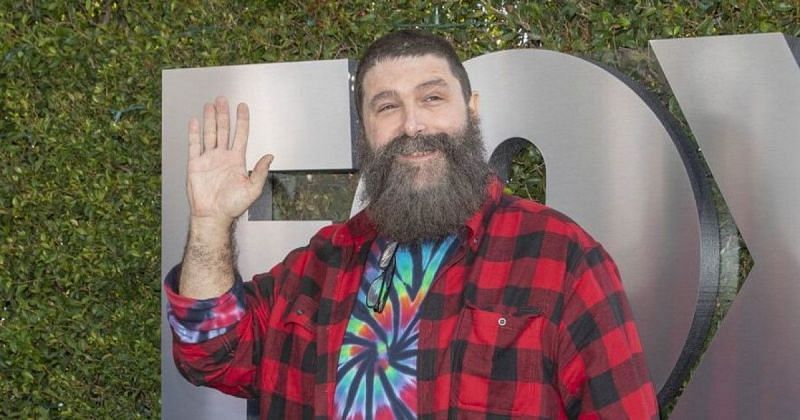
Mick Foley pitches an all-women’s WWE brand to Vince McMahon 

Mick Foley pitches an all-women’s WWE brand to Vince McMahon 

Mick Foley has made his thoughts known concerning the treatment of women’s wrestling in WWE. In doing so, he seemed to follow up on an idea that was pitched by a recently released superstar.

Mickie James was a part of WWE’s shocking releases on April 15, and in a tell-all appearance on GAW TV, she revealed that she pitched an all-women’s brand in WWE.

The five-time WWE Women’s Champion shared that her idea was shot down immediately, with the reason given to her being the following:

“This one person says to me, ‘They’re never going to do it. Ever. Women’s wrestling doesn’t make money. WWE Evolution was the lowest-rated PPV ever in WWE. I get what you’re trying to do, but I don’t understand why you’re fighting so hard for it.'”

Many fans have been critical online in regards to the reasons given to Mickie James over her pitch.

Someone who appeared to support James’ ideas was WWE Hall of Famer Mick Foley. Online, Foley shared the following to his Twitter page:

“Dear Vince, An all women’s brand NEEDS to happen in @WWE Unless you want @AEW to beat you to the punch. Sincerely, Mick @VinceMcMahon

Carmella also weighed in on the current booking of women in WWE. On Bella’s podcast, the former SmackDown Women’s Champion said:

“I want to see the women,” Carmella said. “That’s why I tune in. If I’m waiting until 10pm to see a girl, it’s like, ‘what the hell?’ That’s not okay for little girls at home or whoever is watching waiting for the women. It just feels like oh, now, there’s only a focus on maybe two women or one women’s storyline.”

Mick Foley had high praise for a recently-released WWE Superstar

The Hall of Famer shared his high opinion on a former member of WWE
The Hall of Famer shared his high opinion on a former member of WWE’s women’s division

Following the surprising WWE releases just over two weeks ago, Mick Foley had great things to say about one superstar who was let go by the company. On Twitter, Foley had the following to say about Chelsea Green:

“.@ImChelseaGreen has the ability to tear it down in any promotion wise enough to hire her,” Foley wrote.

Since her release, Chelsea Green has started her own podcast and has also shared some of her outlashish pitches that she made to Vince McMahon.

Do you agree with Mick Foley? Should WWE establish an all-women’s brand? Share your thoughts in the comments below.

Published 01 May 2021, 00:31 IST


Source link

The post Mick Foley pitches an all-women’s WWE brand to Vince McMahon  appeared first on Chop News.


from Chop News https://ift.tt/2QJrhex

via Blogger https://ift.tt/3e7oUuT
May 01, 2021 at 05:50AM

Young Men Are Dying From Preventable Cancers Because They’re Not Getting Vaccinated

Young Men Are Dying From Preventable Cancers Because They’re Not Getting Vaccinated

The vaccine for human papillomavirus (HPV) is recommended in the United States for all young people up to age 26 to help prevent certain deadly cancers. Today, even though we know both sexes are at risk from HPV-linked cancers, far fewer young men are getting their jabs compared to women.


Analyzing the results of a national health survey between 2010 and 2018, researchers found only 16 percent of men between 18 and 21 years of age reported receiving their first dose of the HPV vaccine. Meanwhile, 42 percent of women in that same age group said they had gotten at least one shot.

Even when accounting for those who got vaccinated after age 18, the survey found less than a third of men received all three doses. For women, it was closer to half.

The study did not examine why this discrepancy exists, but it certainly lines up with traditional messaging around the vaccine. In 2006, the HPV vaccine was first approved in the US to reduce cervical cancer rates, with outreach and education aimed at young female patients.

It took three more years for the FDA to approve the vaccine for anal cancer and penile cancer as well, even though these are also associated with HPV.

Only in 2020 was the vaccine expanded to include the prevention of oropharyngeal cancer, which is more likely to affect men.

“I don’t think that a lot of people, both providers and patients, are aware that this vaccine is actually a cancer-prevention vaccine for men as well as women,” says head, neck, and throat surgeon Michelle Chen from the University of Michigan.


“But HPV-associated oropharyngeal cancer can impact anyone – and there’s no good screening for it, which makes vaccination even more important.”

While cervical cancers are dropping significantly among young women in the US, oral cancers, of which 70 percent are caused by HPV, have become one of the fastest-increasing cancers in the world.

The major sex discrepancy in HPV vaccines likely plays a role in that, and not just in the US. It took until 2019 for the United Kingdom to open their free HPV vaccine program to young boys as well as girls.

And it’s a good thing they did. Public Health England (PHE) claims this new and improved program will now prevent more than 50,000 non-cervical cancers across the nation by 2058. 

In the US, Chen thinks similar advances can be made with a renewed push from pediatricians as well as university health services to recommend the vaccine to both sexes. 

In 2019, a study found adolescents who did not have the vaccine recommended by their family physician were close to half as likely to get vaccinated.

“Eighteen- to 21-year-olds are at this age where they’re making health care decisions on their own for the first time,” says Chen.


“They’re in a period of a lot of transition, but young adult men especially, who are less likely to have a primary care doctor, are often not getting health education about things like cancer prevention vaccines.”

Other barriers to vaccination include the sheer cost of the vaccine regimen, which can sometimes amount to $450 in the US. 

In Australia, where the vaccine is free and available in schools, more than 70 percent of teenage boys and girls are vaccinated and cervical cancers associated with HPV have nearly been eliminated.

The best way to protect everyone from infection, reduce transmission, increase herd immunity and prevent HPV-associated diseases, is to get young people of both sexes vaccinated.

The study was published in JAMA.


Source link

The post Young Men Are Dying From Preventable Cancers Because They’re Not Getting Vaccinated appeared first on Chop News.


from Chop News https://ift.tt/330YoNo

via Blogger https://ift.tt/334HvBG
May 01, 2021 at 05:50AM

First round of the 2021 NFL Draft attracted 12.6 million viewers

First round of the 2021 NFL Draft attracted 12.6 million viewers

NFL Commissioner Roger Goodell announces Kwity Paye as the 21st selection by the Indianapolis Colts during round one of the 2021 NFL Draft at the Great Lakes Science Center in Cleveland, Ohio. (Photo by Gregory Shamus/Getty Images)

Gregory Shamus | Getty Images Sport | Getty Images

The National Football League’s opening night of its annual draft event averaged 12.6 million viewers across three networks including ESPN and ABC.

It didn’t top last year’s all-time high of 15.5 million viewers, but it was up 11 percent compared to 2019 draft (11.4 million). Prior to last year, the all-time high was 12.4 million viewers in 2014.  The 2020 NFL Draft was an all-virtual event due to Covid-19.

The Jacksonville Jaguars drafted ex-Clemson quarterback Trevor Lawrence with the 2021 first overall pick, followed by the New York Jets taking BYU’s Zach Wilson. Overall, five quarterbacks were selected in the first round and 18 offensive players. It’s the most since teams drafted 19 offensive players in 2009.

Ja’Marr Chase, Trey Lance, Kyle Pitts and Rashawn Slater stand onstage prior to the start of round one of the 2021 NFL Draft at the Great Lakes Science Center in Cleveland, Ohio.

Gregory Shamus | Getty Images Sport | Getty Images

This year’s draft returned to a live event format on public grounds in Cleveland. A vaccinated Roger Gooddell embraced players who were drafted, and the NFL commissioner was also accompanied by one fan on stage for each pick.

Las Vegas is selected to host the NFL Draft in 2022. The draft event was initially scheduled in the city last April but canceled due to the pandemic.

The 2021 draft continues Friday with rounds two and three. The remaining rounds (four through seven) are scheduled for Saturday. The draft is televised on Disney properties ABC and ESPN and the league-owned NFL Network.

Source link

The post First round of the 2021 NFL Draft attracted 12.6 million viewers appeared first on Chop News.


from Chop News https://ift.tt/3xDlgRe

via Blogger https://ift.tt/2RfFQqd
May 01, 2021 at 05:50AM

Fintech stays hot, Brex doubles, and startup IRR is up all over – TechCrunch

Fintech stays hot, Brex doubles, and startup IRR is up all over – TechCrunch

Tech companies in Silicon Valley, the geography, have had an incredible year. But one indicator points to longer-term changes. The internal rate of return (IRR) for companies in other startup hub cities has been even better. A big new analysis by AngelList showed aggregate IRR of 19.4% per year on syndicated deals elsewhere versus 17.5% locally. A separate measure, of total value of paid-in investment, revealed 1.67x returns for other hubs versus 1.60x in the main Silicon Valley and Bay Area tech cities.

The data is based on a sample of 2,500 companies that have used AngelList to syndicate deals from 2013 through 2020. Which is just one snapshot, but a relevant one given how hard it can be to produce accurate early-stage startup market analysis at this scale. I believe we’ll see more and more data confirming the trends in the coming years, especially as more of the startup world acclimates to remote-first and distributed offices. You can increasingly do a startup from anywhere and make it a success. Not that Silicon Valley is lacking optimism, as you’ll see in a number of the other stories in the roundup below!

Eric Eldon
Managing Editor, Extra Crunch

(Subbing in for Walter today as he’s enjoying a well-deserved break and definitely not still checking the site.)

Optimism reigns at consumer trading services as fintech VC spikes and Robinhood IPO looms

Fintech stays hot, Brex doubles, and startup IRR is up all over – TechCrunch

Image Credits: Nigel Sussman (opens in a new window)

With the Coinbase direct listing behind us and the Robinhood IPO ahead, it’s a heady time for consumer-focused trading apps.

Mix in the impending SPAC-led debut of eToro, general bullishness in the cryptocurrency space, record highs for some equities markets, and recent rounds from Public.com, M1 Finance and U.K.-based Freetrade, and you could be excused for expecting the boom in consumer asset trading to keep going up and to the right.

But will it? There are data in both directions.

After going public, once-hot startups are riding a valuation roller coaster

Fintech stays hot, Brex doubles, and startup IRR is up all over – TechCrunch

Image Credits: Nigel Sussman (opens in a new window)

A short meditation on value, or, more precisely, how assets are valued in today’s markets.

Long story short: This is why I only buy index funds. No one knows what anything (interesting) is worth.

Should you give an anchor investor a stake in your fund’s management company?

Image of a red anchor resting on pile of money.

Image Credits: Matthias Kulka (opens in a new window) / Getty Images

Raising capital for a new fund is always hard.

But should you give preferential economics or other benefits to a seed anchor investor who makes a material commitment to the fund? Let’s break down the pros and cons.

2021 should be a banner year for biotech startups that make smart choices early

Fintech stays hot, Brex doubles, and startup IRR is up all over – TechCrunch

Image Credits: TEK IMAGE/SCIENCE PHOTO LIBRARY / Getty Images

Last year was a record 12 months for venture-backed biotech and pharma companies, with deal activity rising to $28.5 billion from $17.8 billion in 2019.

As vaccines roll out, drug development pipelines return to normal, and next-generation therapies continue to hold investor interest, 2021 is on pace to be another blockbuster year.

But founder missteps early in the fundraising journey can result in severe consequences.

In this exciting moment, when younger founders will likely receive more attention, capital and control than ever, it’s crucial to avoid certain pitfalls.

Two investors weigh in: Is your SPAC just a PIPE dream?

A picture of a Dandelion in the wind, with a background of cool blue colours, blurred from the narrow pane of focus. Composition made in photoshop. (A picture of a Dandelion in the wind, with a background of cool blue colours, blurred from the narrow

Image Credits: Maxime Robeyns/EyeEm (opens in a new window) / Getty Images

The fundamental thing to remember about the SPAC process is that the result is a publicly traded company open to the regulatory environment of the SEC and the scrutiny of public shareholders.

In today’s fast-paced IPO world, going public can seem like simply a marker of success, a box to check.

But are you ready to be a public company?

There is no cybersecurity skills gap, but CISOs must think creatively

Image of a question mark, gears, a lightbulb, and an exclamation point on chairs in a waiting room.

Image Credits: Westend61 (opens in a new window) / Getty Images

Those of us who read a lot of tech and business publications have heard for years about the cybersecurity skills gap. Studies often claim that millions of jobs are going unfilled because there aren’t enough qualified candidates available for hire.

Don’t buy it.

The basic laws of supply and demand mean there will always be people in the workforce willing to move into well-paid security jobs. The problem is not that these folks don’t exist. It’s that CIOs or CISOs typically look right past them if their resumes don’t have a very specific list of qualifications.

In many cases, hiring managers expect applicants to be fully trained on all the technologies their organization currently uses. That not only makes it harder to find qualified candidates, but it also reduces the diversity of experience within security teams — which, ultimately, may weaken the company’s security capabilities and its talent pool.

To be frank, we do not know how to value Honest Company

Fintech stays hot, Brex doubles, and startup IRR is up all over – TechCrunch

Image Credits: Nigel Sussman (opens in a new window)

We do not know how to value Honest Company.

It’s outside our normal remit, but that the company is getting out the door at what appears to be a workable price gain to its final private round implies that investors earlier in its cap table are set to do just fine in its debut. Snowflake it is not, but at its current IPO price interval, it is hard to not call Honest a success of sorts — though we also anticipate that its investors had higher hopes.

Returning to our question, do we expect the company to reprice higher? No, but if it did, The Exchange crew would not fall over in shock.

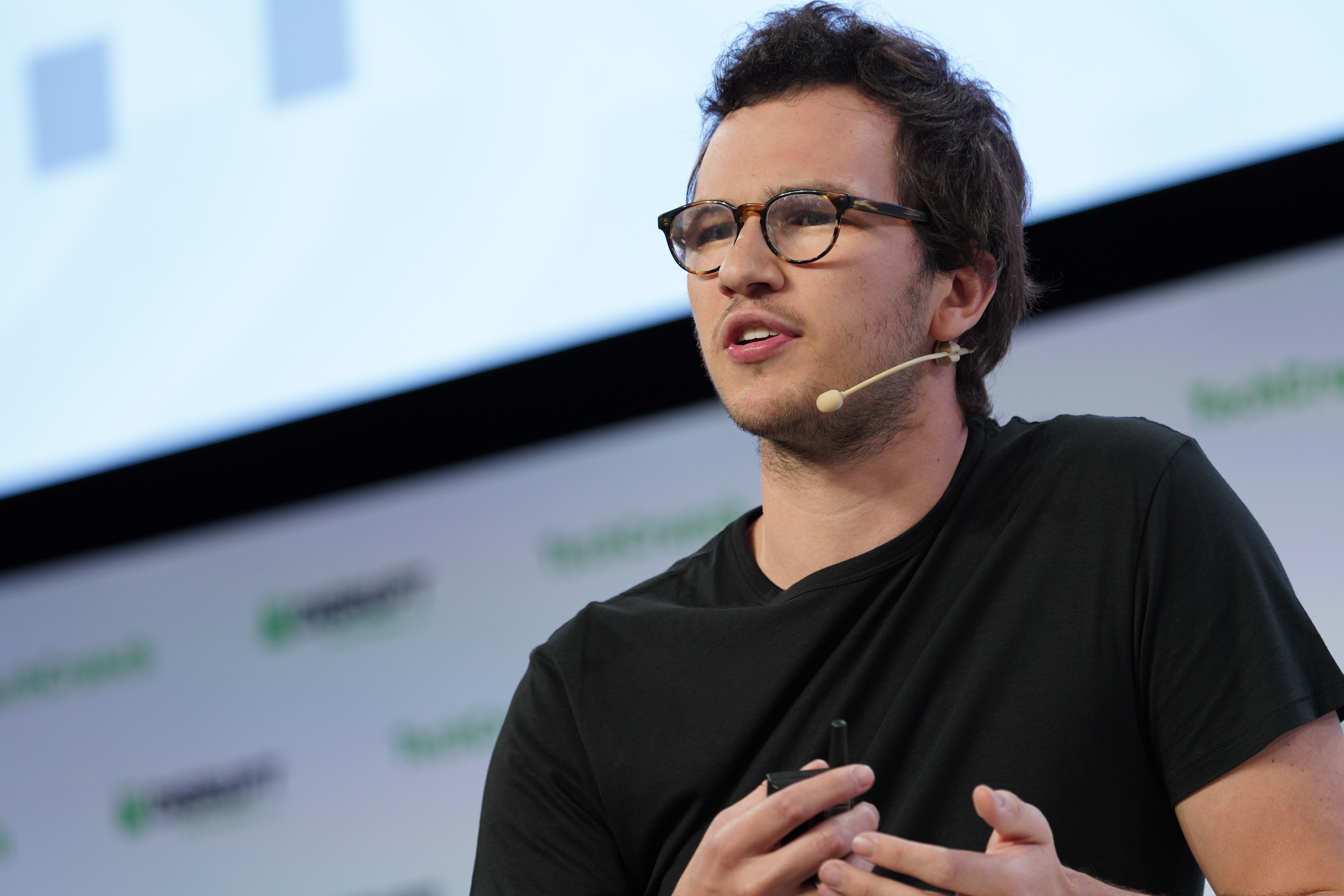
How Brex more than doubled its valuation in a year
Henrique Dubugras BrexDSC02452

Image Credits: TechCrunch

Brex, a fintech company that provides corporate cards and spend-management software to businesses, announced Monday that it closed a $425 million Series D round of capital at a valuation of around $7.4 billion.

The new capital came less than a year after Brex raised $150 million at a $2.9 billion pre-money valuation.

So, how did the company manage to so rapidly boost its valuation and raise its largest round to date?

TechCrunch spoke with Brex CEO Henrique Dubugras after his company’s news broke. We dug into the how and why of its new investment and riffed on what going remote-first has done for the company, as well as its ability to attract culture-aligned and more diverse talent.

Founders who don’t properly vet VCs set up both parties for failure

Portrait of two men in cardboard boxes

Image Credits: Flashpop (opens in a new window) / Getty Images

There’s a disconnect between reality and the added value investors are promising entrepreneurs. Three in five founders who were promised added value by their VCs felt duped by their negative experience.

While this feels like a letdown by investors, in reality, it shows fault on both sides. Due diligence isn’t a one-way street, and founders must do their homework to make sure they’re not jumping into deals with VCs who are only paying lip service to their value-add.

Looking into an investor’s past, reputation and connections isn’t about finding the perfect VC, it’s about knowing what shaking certain hands will entail — and either being ready for it or walking away.

Fifth Wall’s Brendan Wallace and Hippo’s Assaf Wand discuss proptech’s biggest opportunities

Fintech stays hot, Brex doubles, and startup IRR is up all over – TechCrunch

Image Credits: Jeff Newton / Hippo

What is the biggest opportunity for proptech founders? How should they think about competition, strategic investment versus top-tier VC firms and how to build their board? What about navigating regulation?

We sat down with Brendan Wallace, co-founder and general manager of Fifth Wall, and Hippo CEO Assaf Wand for an episode of Extra Crunch Live to discuss all of the above.

SaaS subscriptions may be short-serving your customers

Suggesting scarcity, a single green pea rests in the middle of a dinner plate surrounded by tableware.

Image Credits: emyerson (opens in a new window) / Getty Images

Software as a service (SaaS) has perhaps become a bit too interchangeable with subscription models.

Every software company now looks to sell by subscription ASAP, but the model itself might not fit all industries or, more importantly, align with customer needs, especially early on.

What can the OKR software sector tell us about startup growth more generally?

In the never-ending stream of venture capital funding rounds, from time to time, a group of startups working on the same problem will raise money nearly in unison. So it was with OKR-focused startups toward the start of 2020.

How were so many OKR-focused tech upstarts able to raise capital at the same time? And was there really space in the market for so many different startups building software to help other companies manage their goal-setting? OKRs, or “objectives and key results,” a corporate planning method, are no longer a niche concept. But surely, over time, there would be M&A in the group, right?

Fintech stays hot, Brex doubles, and startup IRR is up all over – TechCrunch

Image Credits: Nigel Sussman (opens in a new window)

Internal rates of return in emerging US tech hubs are starting to overtake Silicon Valley

Passenger Jet Plane Flying Above San Francisco for travel concept

Image Credits: petdcat (opens in a new window) / Getty Images

Tech innovation is becoming more widely distributed across the United States.

Among the five startups launched in 2020 that raised the most financing, four were based outside the Bay Area. The number of syndicated deals on AngelList in emerging markets from Austin to Seattle to Pittsburgh has increased 144% over the last five years.

And the number of startups in these emerging markets is growing fast — and increasingly getting a bigger piece of the VC pie.

Fund managers can leverage ESG-related data to generate insights

Image of a hand holding green piggybank in a green field.

Image Credits: Guido Mieth (opens in a new window)/ Getty Images

Almost two centuries ago, gold prospectors in California set off one of the greatest rushes for wealth in history. Proponents of socially conscious investing claim fund managers will start a similar stampede when they discover that environmental, social and governance (ESG) insights can yield treasure in the form of alternative data that promise big payoffs — if only they knew how to mine it.

ESG data is everywhere. Learning how to understand it promises big payoffs.


Dear Sophie: What’s the latest on DACA?

lone figure at entrance to maze hedge that has an American flag at the center

Image Credits: Bryce Durbin/TechCrunch

Dear Sophie,

My company is looking to hire a very talented data infrastructure engineer who is undocumented. She has never applied for DACA before.

What is the latest on DACA? What can we do to support her?

—Multicultural in Milpitas

Zomato juice: Indian unicorn’s proposed IPO could drive regional startup liquidity

Fintech stays hot, Brex doubles, and startup IRR is up all over – TechCrunch

Image Credits: Nigel Sussman (opens in a new window)

The IPO parade continued this week as India-based food-delivery unicorn Zomato filed to go public. 

The Zomato IPO is incredibly important. As our own Manish Singh reported when the company’s numbers became public, a “successful listing [could be] poised to encourage nearly a dozen other unicorn Indian startups to accelerate their efforts to tap the public markets.”

So, Zomato’s debut is not only notable because its impending listing gives us a look into its economics, but because it could lead to a liquidity rush in the country if its flotation goes well.

Investment in construction automation is essential to rebuilding US infrastructure

Well bought construction workers building house

Image Credits: Donald Iain Smith (opens in a new window) / Getty Images

With the United States moving all-in on massive infrastructure investment, much of the discussion has focused on jobs and building new green industries for the 21st century.

While the Biden administration’s plan will certainly expand the workforce, it also provides a massive opportunity for the adoption of automation technologies within the construction industry.

Despite the common narrative of automating away human jobs, the two are not nearly as much in conflict, especially with new investments creating space for new roles and work.

In fact, one of the greatest problems facing the construction industry remains a lack of labor, making automation a necessity for moving forward with these ambitious projects.

How to fundraise over Zoom more effectively

Image showing person at computer and person presenting seeking funding.,

Image Credits: fourSage (opens in a new window)/ Getty Images

Even though in-person drinks and coffee walks are on the horizon, virtual fundraising isn’t going away.

Now, it’s imperative to ensure your virtual pitch is as effective as your IRL one.

Not only is it more efficient — no expensive trips to San Francisco or trouble fitting investor meetings into one day — virtual fundraising helps democratize access to venture capital.

Hacking my way into analytics: A creative’s journey to design with data

Abstract Particle connection network background

Image Credits: Xuanyu Han (opens in a new window) / Getty Images

There’s a growing need for basic data literacy in the tech industry, and it’s only getting more taxing by the year.

Words like “data-driven,” “data-informed” and “data-powered” increasingly litter every tech organization’s product briefs. But where does this data come from?

Who has access to it? How might I start digging into it myself? How might I leverage this data in my day-to-day design once I get my hands on it?

Fintech startups set VC records as the 2021 fundraising market continues to impress

Fintech stays hot, Brex doubles, and startup IRR is up all over – TechCrunch

Image Credits: Nigel Sussman (opens in a new window)

The first three months of the year were the most valuable period for fintech investing, ever.

Where did the fintech venture capital market push the most money in Q1, and why? Let’s dig in.

Healthcare is the next wave of data liberation

Image of a balloon carrying away a brain.

Image Credits: PM Images (opens in a new window)/ Getty Images

Why can we see all our bank, credit card and brokerage data on our phones instantaneously in one app, yet walk into a doctor’s office blind to our healthcare records, diagnoses and prescriptions?

Our health status should be as accessible as our checking account balance.

The liberation of healthcare data is beginning to happen, and it will have a profound impact on society — it will save and extend lives.

What private tech companies should consider before going public via a SPAC

Image of intertwining arrows on a chalkboard to represent decision-making.

Image Credits: cnythzl (opens in a new window) / Getty Images

The red-hot market for special purpose acquisition companies, or SPACs, has “screeched to a halt.”

As the SPAC market grew in the past six months, it seemed that everyone was getting into the game. But shareholder lawsuits, huge value fluctuations and warnings from the U.S. Securities and Exchange Commission have all thrown the brakes on the SPAC market, at least temporarily.

So what do privately held tech companies that are considering going public need to know about the SPAC process and market?

The era of the European insurtech IPO will soon be upon us

Detail of Euro note showing European continent

Image Credits: Image Source (opens in a new window) / Getty Images

Once the uncool sibling of a flourishing fintech sector, insurtech is now one of the hottest areas of a buoyant venture market. Zego’s $150 million round at unicorn valuation in March, a rumored giant incoming round for WeFox, and a slew of IPOs and SPACs in the U.S. are all testament to this.

It’s not difficult to see why. The insurance market is enormous, but the sector has suffered from notoriously poor customer experience, and major incumbents have been slow to adapt. Fintech has set a precedent for the explosive growth that can be achieved with superior customer experience underpinned by modern technology. And the pandemic has cast the spotlight on high-potential categories, including health, mobility and cybersecurity.

This has begun to brew a perfect storm of conditions for big European insurtech exits.

The health data transparency movement is birthing a new generation of startups

Medicine doctor hand working with modern computer interface as medical network concept

Image Credits: Busakorn Pongparnit (opens in a new window) / Getty Images

The recent movement toward data transparency is bringing about a new era of innovation and startups.

Those who follow the space closely may have noticed that there are twin struggles taking place: a push for more transparency on provider and payer data, including anonymous patient data, and another for strict privacy protection for personal patient data.

What’s the main difference, and how can startups solve these problems?



Source link

The post Fintech stays hot, Brex doubles, and startup IRR is up all over – TechCrunch appeared first on Chop News.


from Chop News https://ift.tt/3t24kjS

via Blogger https://ift.tt/3nB5npP
May 01, 2021 at 05:50AM