Wednesday, 31 March 2021

Lowkey raises $7 million from a16z to help game streamers capitalize on short-form video – TechCrunch

While the growth of game-streaming audiences have continued on desktop platforms, the streaming space has felt surprisingly stagnant at times, particularly due to the missing mobile element and a lack of startup competitors.

Lowkey, a gaming startup that builds software for game streamers, is aiming to build out opportunities in bit-sized clips on mobile. The startup wants to be a hub for both creating and viewing short gaming clips but also sees a big opportunity in helping streamers cut down their existing content for distribution on platforms like Instagram and TikTok where short-form gaming content sees a good deal of engagement.

The startup announced today that they’ve closed a $7 million Series A led by Andreessen Horowitz with participation from a host of angel investors including Figma’s Dylan Field, Loom’s Joe Thomas and Plaid’s Zach Perret and William Hockey.

We last covered Lowkey in early 2020 when the company was looking to build out a games tournament platform for adults. At the time, the company had already pivoted after going through YC as Camelot, which allowed audiences on Twitch and YouTube to pay creators to take on challenges. This latest shift brings Lowkey back to the streaming world but more focused on becoming a tool for streamers and a mobile hub for viewers.

Twitch and YouTube Gaming have proven to be pretty uninterested in short-form content, favoring the opportunities of long-form streams that allow creators to press broadcast and upload lengthy streams. Lowkey users can easily upload footage captured from Lowkey’s desktop app or directly import a linked stream. This allows content creators to upload and comment on their own footage or remix and respond to another streamer’s content.

One of the challenges for streamers has been adapting widescreen content for a vertical video form factor, but CEO Jesse Zhang says that it’s not really a problem with most modern games. “Games inherently want to focus you attention on the center of the screen,” Zhang tells TechCrunch. “So, almost all clips extend really cleanly to like a mobile format, which is what we’ve done.”

Lowkey’s desktop app is available on Windows and their new mobile app is now live for iOS.

Source link

The post Lowkey raises $7 million from a16z to help game streamers capitalize on short-form video – TechCrunch appeared first on Chop News.


from Chop News https://ift.tt/3sSIhNr

We’ve Found Deep Parts of The Sea Where The Last Ice Age Never Actually Ended

Some of the deepest parts of the Black Sea are still responding to climate changes prompted by the last ice age, scientists have discovered – a period which officially ended almost 12,000 years ago.


An analysis of gas hydrate deposits – in this case methane trapped by water molecules, in a solid substance that looks like ice – has revealed the lagging response in a northwestern area of the Black Sea known as the Danube fan.

Together with temperature measurements and other data, the drill cores of the gas hydrate deposits reveal something rather surprising: Levels of free methane gas under the seafloor have not yet adapted to the warmer conditions that have already prevailed on the surface for thousands of years.

“This shows that the gas hydrate system in the Danube deep sea fan is still responding to climate changes initiated at the end of the last glacial maximum,” write the researchers in their paper.

gas age 2Examining drill cores. (Christian Rohleder)

Central to the findings are scientists’ attempts to determine the base of the gas hydrate stability zone (GHSZ) – the lowest point at which gas hydrates naturally form due to temperature, pressure, and a few other factors. Above and below that zone, you’ll get ‘free’ methane gas not trapped in hydrates.

To find the base of this zone, researchers typically turn to a seismic reflection measure of the sediment known as the bottom-simulating reflector, or BSR for short. However, earlier work has found that in this part of the Black Sea, there’s a curious depth discrepancy between the BSR and the base of the gas hydrate stability zone. 


By drilling down to the seafloor and taking temperature measurements, researchers have now concluded that the gas hydrate stability zone has adapted to the warmer conditions over the past millennia – as indicated by a rise to a higher level – but the free methane gas and the associated BSR are still playing catch up.

“From our point of view, the gas-hydrate stability boundary has already approached the warmer conditions in the subsurface, but the free methane gas, which is always found at this lower edge, has not yet managed to rise with it,”  says geophysicist Michael Riedel, from the GEOMAR Helmholtz-Center for Ocean Research in Germany.

That lagging response could be why the BSR isn’t where it should be. Sediment permeability could also play a role, the team thinks, and their measurements show that methane has managed to rise in certain areas but not others.

“In summary, we have found a very dynamic situation in this region, which also appears to be related with the development of the Black Sea since the last ice age,” says Riedel.

Around 20,000 years ago, the water level was around 100 meters (328 feet) lower in the Black Sea, meaning less pressure on the sea bed. The water was significantly cooler too. As far as the free methane gas is concerned, those conditions haven’t yet changed.

As with any study of the effects of climate change, this research is going to help in future climate modeling. There’s currently a huge volume of gas hydrate deposits underneath the Arctic, for instance, and it’s important to know how they might react to increases in temperature in the years ahead.

The scientists emphasize that their findings should be interpreted cautiously, with many different factors in play and plenty more scope for study – but they also stress the importance of in-situ measurements and quality data for an analysis such as this.

“For our investigations we used our drilling device MARUM-MeBo200 and broke all previous depth records with a maximum depth reached of almost 145 meters [476 feet],” says geologist Gerhard Bohrmann, from the University of Bremen in Germany.

The research has been published in Earth and Planetary Science Letters.


Source link

The post We’ve Found Deep Parts of The Sea Where The Last Ice Age Never Actually Ended appeared first on Chop News.


from Chop News https://ift.tt/3fxEtx4

Everything players need to know

Coal is one of Minecraft’s most useful resources as it provides light in the sometimes dark and scary Overworld.

The item can be mined and gathered from coal ore blocks found throughout the Overworld.


Also read: Obsidian in Minecraft: Everything players need to know


Coal in Minecraft

Spawning

Coal is a very common item that can be mined and gathered from coal ore blocks in Minecraft (Image via Minecraft)

The following information pertains to the current Minecraft release, Update 1.16.5. Coal’s spawning mechanics will change in Update 1.17.

Coal ore spawns very commonly from levels 0-137. It will spawn in veins as small as one ore to as large as 37 ore. On average, 307 ore spawns per chunk, which is quite a large amount.

Coal can be mined with any pickaxe, including Wooden. It can also be dropped by Wither Skeletons.


Also read: Sweet Berries in Minecraft: Everything players need to know


Uses

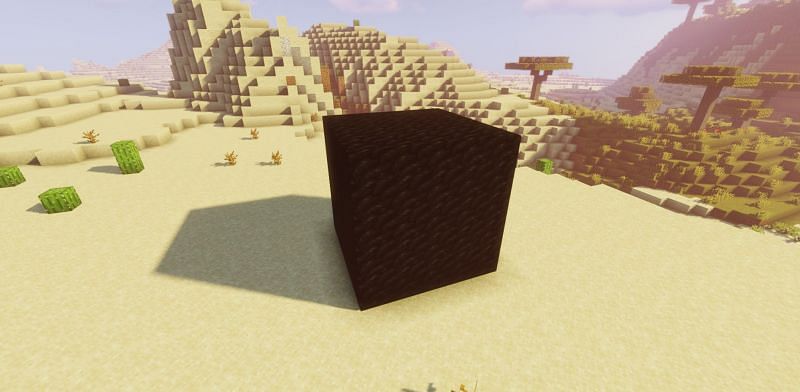
Shown: A block of coal made out of many blocks of coal (Image via Minecraft)

Here are some of the uses of coal in Minecraft:

  • Coal can be used as fuel in a Furnace or Minecart with Furnace, smelting eight items per coal.
  • Nine coal can be used to craft a block of coal (shown above).
  • Coal’s main use is to craft torches (this requires one coal).
  • Coal can be used to craft campfires.
  • Coal can be used to craft fire charges.
  • A Novice-level Fisherman Villager may buy 10 coal for one Emerald. (50% chance)

Coal is commonly mistaken with Charcoal, which can be created by smelting logs or wood. It can also be obtained by breaking a Campfire without using the Silk Touch enchantment.


Also read: The End City in Minecraft: Everything players need to know

Published 01 Apr 2021, 06:31 IST


Source link

The post Everything players need to know appeared first on Chop News.


from Chop News https://ift.tt/3wevCGt

From the ground up – Nation News

Standing on the bridge on river Papagni in Andhra Pradesh’s YSR Kadapa district, Chirutani Pratap points to the shimmering rivulets in the dry river bed below. “We have begun seeing this only in the past two years. Usually, the river flows like a stream just for four months during the rainy season every year,” says the 50-year-old environmental engineer of the Andhra Pradesh water resources department about the unique transformation.

The change has been brought about by a string of subsurface dams (SSDs) on the Papagni, a non-perennial river which joins the Penna river in Kadapa. The purpose of SSDs, built across streams or valleys, is to establish an underground reservoir and to recharge groundwater. The structure relies on piling technology that drives zig-zag-shaped steel sheets 18 metres deep into the sand to form a wall of sorts across the groundwater channel and impound water in reservoirs below to increase the groundwater storage. In Kadapa, the dams were built between May 2017 and March 2018 at six slopes along a 34 km stretch of the river. By 2019, the increased water levels ranged from 5.19 metres at Gandi district to 14.64 metres at U Rajupalem.

“They are cost-effective, unlike the conventional concrete dams, and allow for minimal evaporation, which prevents the loss of stored water,” says Pratap. The SSDs have raised the groundwater table and allowed farmers in the vicinity to tap into this resource for at least four months even after the trickle on the river surface has dried. The cost of constructing SSDs is barely a tenth of that of conventional dams with the same storage.

In YSR Kadapa, since 80 per cent of the geological area is covered with sedimentary (shale and limestone) deposits that are impervious in nature, groundwater tends to deplete quickly. As a result, natural recharge is very slow. Data shows that since the construction of SSDs, the water levels in borewells in river-adjacent areas have been augmented and contribute to sustainable irrigation in the drought-prone district. As a result, the growth of the paddy crop during the kharif season has stabilised and a second crop, mostly sunflower, is also being grown during the rabi season.

The United Nations Convention to Combat Desertification suggested groundwater dams, such as SSD, as a technology suitable for economic storage of water in arid and semi-arid regions.

In the absence of budgetary allocations, YSR Kadapa district collector C. Hari Kiran banked on the mineral cess collected in the district and available for discretionary use to find the Rs 26 crore required for the construction of SSDs. “There have been many inquiries about SSDs from drought-prone areas,” says Kiran. “A minimum topographic riverbed slope of five to six metres is required. Suitable gradients, between 0.2 per cent and 4 per cent, which is usually the case in the transition zones between hills and plains, are the essential geographical circumstances.” Further, SSDs can be built where rivers are narrow, less than 500 metres wide, or in areas with already developed farms but ones that lack water for irrigation.

SSDs have changed the face of farming in YSR Kadapa within two years, and benefitted an area of around 8,000 acres.

Source link

The post From the ground up – Nation News appeared first on Chop News.


from Chop News https://ift.tt/3sFsKAj

Papua New Guinea coronavirus cases spike, health system on the brink

Australian officials carry boxes containing some 8,000 initial doses of the AstraZeneca vaccine following their arrival on board a Royal Australian Air Force plane at the Port Moresby international airport on March 23, 2021, as Papua New Guinea raced to quell a Covid-19 surge overwhelming its fragile health system.

Andrew Kutan | AFP | Getty Images

The coronavirus crisis that has gripped Papua New Guinea continues to worsen, as the Indo-Pacific nation waits in earnest for vaccines to arrive.

In just one week — between March 22 and March 28 — there were 1,786 new reported cases of Covid-19 and 13 deaths, according to the latest report from the World Health Organization and the PNG National Department of Health.

The weekly joint report said that as of March 28, noon local time, the island-nation reported 5,349 total cases and 49 deaths. It was the eighth consecutive week of increases.

Papua New Guinea is a heavily forested nation of fewer than 9 million people that lies about 100 miles (160 km) north of Australia at their closest point.

Prime Minister James Marape acknowledged last week there is “rampant community transmission.”

Health system as ‘risk of collapsing’

The situation on the ground in PNG is said to be dire and international organizations such as Medecins Sans Frontieres (MSF) have warned of an imminent collapse of the country’s overwhelmed health-care system.

“The health system in PNG is at risk of collapsing, as health facilities managing COVID-19 are close to capacity and almost too stretched to provide regular basic healthcare,” MSF said.

The Pacific island state has only about 500 doctors, less than 4,000 nurses, and below 3,000 community health workers, according to data the prime minister shared last year during an address to parliament. There are just about 5,000 bed spaces in hospitals, he added.

MSF, which provides medical humanitarian assistance to countries in crisis, said that an increasing number of health-care staff in PNG tested positive for Covid-19, forcing them to quarantine at home. Health facilities managing the outbreak are close to full capacity, resulting in longer waiting times.

PNG also has relatively poor health indicators, according to Kate Schuetze, Pacific researcher at Amnesty International.

Additional personal protective equipment, testing capacity and human resources need to be considered fast to provide assistance to the already strained healthcare system.

Ghulam Nabi

interim head of mission for Papua New Guinea at MSF

“We’ve got already a poor health-care system and then you’ve also got high levels of comorbidities that are also going to impact with the Covid-19 crisis,” Schuetze told CNBC on Wednesday. “So, you have malaria in the country, you have multi-drug resistant tuberculosis as well as a range of other illnesses that could compound the impact of Covid-19.”

A large number of people also live in rural or remote communities where it’s hard to access the same level of health care as those living in urban centers such as Port Moresby, the capital of Papua New Guinea, she added.

Strained health-care system

According to the joint report from WHO and the health department, only 7,061 Covid tests were conducted between March 22 and March 28 — that means 25.29% of those tests returned positive.

Large-scale testing remains low across most of the country and there’s a shortage of tests kits as well as logistical difficulties, the report noted. That suggests the actual number of infections across the country may be significantly higher than what is being formally reported.

As isolation wards filled up in hospitals, PNG turned a sports complex into a temporary field hospital for Covid-19 patients.

MSF said on Friday that it is supporting local health services by providing staff and cartridges to analyze samples of polymerase chain reaction tests that are widely used to detect the coronavirus. Almost 40% of the people getting tested at one of the health facilities have Covid-19, according to MSF. The organization expects more cases in the coming weeks.

MSF also said it only has enough testing cartridges to last up to two weeks.

“Additional personal protective equipment, testing capacity and human resources need to be considered fast to provide assistance to the already strained healthcare system,” said Ghulam Nabi, interim head of mission for Papua New Guinea at MSF, in a statement.

He added that MSF is calling on organizations in the region to act and mobilize quickly to increase their support to the Pacific nation.

Access to vaccines and tackling misinformation

PNG this week rolled out its vaccination drive using the 8,000 doses of AstraZeneca’s Covid-19 shots that Australia donated.

The country’s prime minister Marape received his first dose on Tuesday, according to reports.

Rising vaccine nationalism around the world is making it more difficult for small, developing nations such as PNG to access shots to inoculate their population.

Many of them rely on a global vaccination initiative called Covax, which aims to ensure equitable distribution of shots in less wealthy countries. It is co-led by WHO, Gavi — the Vaccine Alliance, and the Coalition for Epidemic Preparedness Innovations.

Amnesty’s Schuetze said one of the challenges with the Covax facility is that not enough countries are donating sufficient money and resources, or supplying enough vaccines, to ensure a more equitable distribution.

PNG is due to receive around 588,000 doses of vaccine from Covax by June.

Australia, for its part, has reportedly asked the European Union to release 1 million doses of AstraZeneca’s vaccine to PNG. It was initially contracted to go to Australia. Reuters reported last week that the EU has yet to respond to that request.

Canberra has also reportedly asked the U.S., Japan and India — the other members of the informal Quad alliance — to help PNG.

Meanwhile, vaccine skepticism and the spread of misinformation is making matters more complicated in the island-nation. Opposition leader Belden Namah reportedly asked the government to suspend the rollout of the AstraZeneca vaccine, alleging it was exposing citizens to potential serious harm.

The PNG government needs to do more to educate and inform the public about vaccines and health-care treatment on Covid-19, Amnesty’s Schuetze said.

Source link

The post Papua New Guinea coronavirus cases spike, health system on the brink appeared first on Chop News.


from Chop News https://ift.tt/3fqGhIe

Miley Cyrus’ Black Tank Top & Tassel Pants: Pic – Hollywood Life

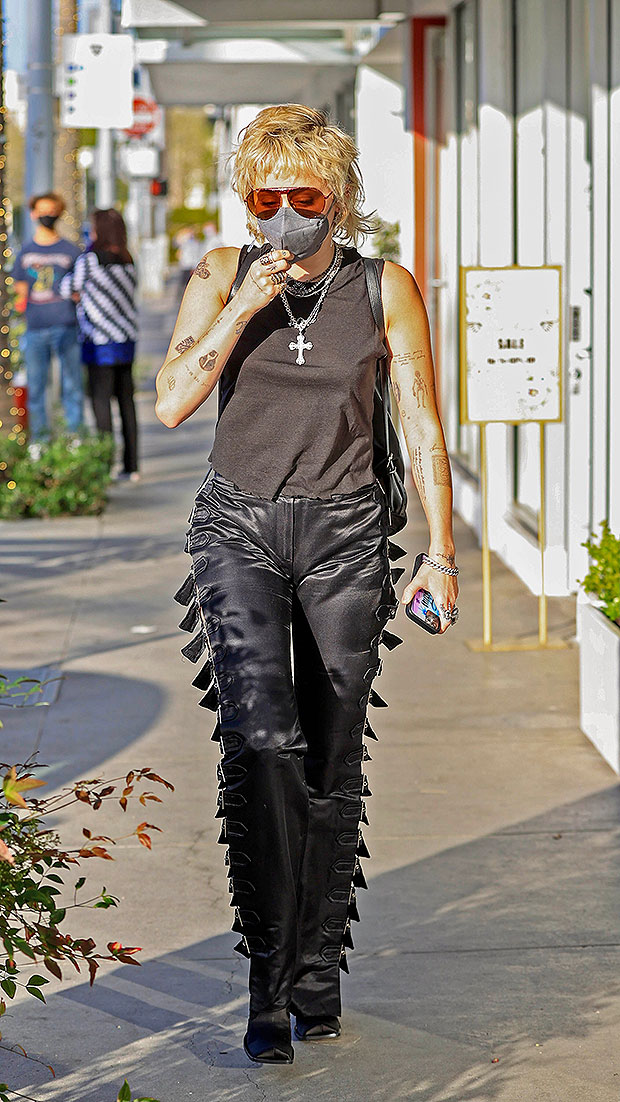
Miley Cyrus is continuing to embrace her full-on rock star aesthetic. She killed it in an all-black ensemble including tassel pants while running errands in Beverly Hills.

Can’t stop, won’t stop! Miley Cyrus has been killing it with rocker wear ever since she dropped her Plastic Hearts album on Nov. 27, 2020. The 28-year-old showed off her latest badass outfit while out and about in Beverly Hills on Mar. 30. She donned a sleeveless black shirt that looked like it had been cut off around the bottom with scissors, as it had jagged cuts around her waistline. The top showed off the “Midnight Sky” singer’s myriad of arm tattoos.

Miley’s pants were what made the look really special, as the shiny black fitted trousers featured open sides that came together via a snap, with a wide tassel hanging off of it. It allowed just the tiniest amount of leg skin to be visible, while making for such a striking look as she walked with the tassels sticking out on the sides.

Miley Cyrus
Miley Cyrus embraces her rocker style in a black ensemble while out in Beverly Hills on Mar. 30, 2020. Photo credit: MEGA.

Miley accessorized with pointed to black boots, a black backpack over her shoulders and lots of chunky silver jewelry. She wore a heavy chain link bracelet around her left wrist, while rocking a number of silver chains around her neck, including one with an elaborate cross. Even though Miley wore a black face mask and had burnt orange tinted shades over her eyes, her current short blonde shag hairstyle gave her away….along with her all-black rocker girl outfit.

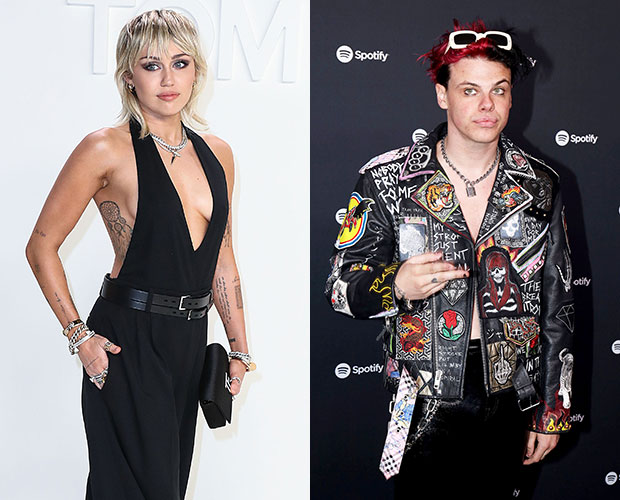
Miley’s sighting comes five days after she was photographed getting cozy with British singer Yungblud at the iconic Rainbow Room bar on the Sunset Strip on Mar. 25. It came at the tail end of a party she hosted to celebrate the 15th anniversary of Hannah Montana premiering on the Disney Channel in 2006. Miley was seated with a group of male pals at a table when the “11 Minutes” singer  — real name Dominic Richard Harrison — came in and joined their group.

Miley Cyrus & Yungblud
Miley Cyrus and Yungblud were photographed packing on plenty of PDA at the Sunset Strip’s Rainbow Room on Mar. 25, 2021. Photo credit: MEGA.

Miley and Yungblud then got pretty cozy, with him running his hands through her hair in one photo, while he put his finger up to Miley’s mouth and she gave it a sexy nibble in another snapshot. At one point Yungblud held on to the “Prisoners” singer’s face by her cheeks and chin with his hand, as she gazed into his eyes. Their flirtation and PDA was super hot, though the two haven’t been spotted together since. Miley has been happily single since splitting with singer Cody Simpson, 24, in Aug. 2020.

Source link

The post Miley Cyrus’ Black Tank Top & Tassel Pants: Pic – Hollywood Life appeared first on Chop News.


from Chop News https://ift.tt/2OdBBdy

Facebook makes it easier to view a non-algorithmic News Feed – TechCrunch

Facebook has some thoughts and updates about its News Feed, Siri gets some new voices and Tonal becomes a unicorn. This is your Daily Crunch for March 31, 2021.

The big story: Facebook makes it easier to view a non-algorithmic News Feed

Facebook highlighted features today that should make it easier for users to see a version of the News Feed that isn’t shaped by the company’s algorithms. These include a Favorites view that displays posts from up to 30 of your favorite friends and Pages, as well as a Most Recent view, which just shows posts in chronological order. Some of these options existed previously, but they’ll now be easily accessible through a new Feed Filter Bar.

At the same time, the company’s VP of Global Affairs, Nick Clegg, pushed back against criticism of the company’s algorithmic News Feed, saying that personalization is common and useful across the web, though he added, “It would clearly be better if these [content] decisions were made according to frameworks agreed by democratically accountable lawmakers.”

Speaking of content decisions, Facebook also cautioned Donald Trump’s daughter-in-law Lara Trump today for posting an interview with the former president, who has been banned from the social network.

The tech giants

Apple adds two brand new Siri voices and will no longer default to a female or male voice in iOS — This means that every person setting up Siri will choose a voice for themselves.

Instagram officially launches Remix on Reels, a TikTok Duets-like feature — Remix offers a way to record your Reels video alongside a video from another user.

Spotify adds three new types of personalized playlists with launch of ‘Spotify Mixes’ — Your Spotify Mixes will include artist mixes, genre mixes and decade mixes.

Startups, funding and venture capital

Strength-training startup Tonal crosses unicorn status after raising $250M — To date, the at-home fitness tech startup has raised $450 million.

Apple invests $50M into music distributor UnitedMasters alongside a16z and Alphabet —  The focus of UnitedMasters is to provide artists with a direct pipeline to data around the way that fans are interacting with their content and community.

Diversity-focused Harlem Capital raises $134M — Apparently 61% of Harlem Capital’s Fund I portfolio companies are led by Black or Latinx executives, while 43% are led exclusively by women.

Advice and analysis from Extra Crunch

Five machine learning essentials nontechnical leaders need to understand — For engineering and team leaders without an ML background, the incredible pace of change can feel overwhelming and intimidating.

What to make of Deliveroo’s rough IPO debut — After a lackluster IPO pricing run, shares of Deliveroo are lower today, marking a disappointing debut for the hot delivery company.

Embedded procurement will make every company its own marketplace — Merritt Hummer of Bain Capital Ventures argues that with embedded procurement, businesses will buy things they need through vertical B2B apps.

(Extra Crunch is our membership program, which helps founders and startup teams get ahead. You can sign up here.)

Everything else

Report finds going remote made workplaces more hostile for already marginalized groups — The Project Include report is based on a survey of about 2,800 people and interviews with tech workers and subject matter experts in numerous countries and industries.

The Weeknd will sell an unreleased song and visual art via NFT auction — Abel Tesfaye, the Super Bowl-headlining musician known as The Weeknd, is the latest artist to embrace the excitement around NFTs.

Here’s what you don’t want to miss tomorrow at TC Early Stage 2021 — The event will include a wide range of presentations that span the startup ecosystem.

The Daily Crunch is TechCrunch’s roundup of our biggest and most important stories. If you’d like to get this delivered to your inbox every day at around 3pm Pacific, you can subscribe here.

Facebook makes it easier to view a non-algorithmic News Feed – TechCrunch

Source link

The post Facebook makes it easier to view a non-algorithmic News Feed – TechCrunch appeared first on Chop News.


from Chop News https://ift.tt/3dlk6R3

Someone in The Kalahari Collected Crystals a Whopping 105,000 Years Ago

A rockshelter in South Africa’s Kalahari documents the innovative behaviors of early humans who lived there 105,000 years ago. We report the new evidence today in Nature.

The rockshelter site is at Ga-Mohana Hill – a striking feature that stands proudly above an expansive savanna landscape.


Many residents of nearby towns consider Ga-Mohana a spiritual place, linked to stories of a great water snake. Some community members use the area for prayer and ritual. The hill is associated with mystery, fear and secrecy.

Now, our findings reveal how important this place was even 105,000 years ago, documenting a long history of its spiritual significance. Our research also challenges a dominant narrative that the Kalahari region is peripheral in debates on the origins of humans.

We know our species, Homo sapiens, first emerged in Africa. Evidence for the complex behaviours that define us has mostly been found at coastal sites in South Africa, supporting the idea that our origins were linked to coastal resources.

This view now requires revision.

kalahari panorama(Author provided)

Above: The Ga-Mohana Hill North Rockshelter is located near the town of Kuruman in the Northern Cape province of South Africa.

A crystal-clear finding

We found 22 white and well-formed calcite crystals brought to the site 105,000 years ago. We determined this using a method called “optically stimulated luminescence”, which dates sediments the crystals were excavated from.

Our analysis indicates the crystals were not introduced into the deposits via natural processes, but rather represent a small cache of deliberately collected objects.


Crystals found across the planet and from several time periods have previously been linked to humans’ spiritual belief and ritual. This includes in southern Africa.

People at coastal sites similarity started to collect non-food seashells around the same time (but not earlier) – perhaps for similar reasons.

one of the crystals
One of 22 calcite crystals excavated from 105,000-year-old deposits. (Author provided)

Egg-citing technology

Ostrich eggshells can make excellent water storage containers and were used as such in southern Africa during the Pleistocene and Holocene. At coastal sites, the earliest evidence for this technology dates back about 105,000 years.

At Ga-Mohana Hill, we found ostrich eggshell fragments that show all the signs of being human-collected, based on their strong association with artefacts (including animal bones that are cut-marked from being butchered), and evidence of having been burned. These fragments may be the remains of early containers.

eggshell an modern canteen(Author provided)

Above: 105,000-year-old ostrich eggshell fragments (left). Modern day example of ostrich eggshell canteen (right).

This suggests early humans in the Kalahari were no less innovative than those living on the coast.

A global effort

International and interdisciplinary collaboration makes for the best research and our paper’s authorship includes researchers from eight institutions across Australia, South Africa, Canada, Austria and the UK.

Local South African collaborators had an especially crucial role. For example, Robyn Pickering, Jessica von der Meden and Wendy Khumalo at the University of Cape Town provided important palaeoenvironmental context for the archaeology.

By dating tufa deposits around Ga-Mohana Hill, they showed water was more abundant 105,000 years ago when early humans were using the rockshelter.


Nnoga ya metsi

Many who visit Ga-Mohana Hill today for ritual practice see it as part of a network of places linked to the Great Water Snake (Nnoga ya metsi), a capricious and shape-shifting being. Many of these spiritual places are also associated with water.

Places such as Ga-Mohana Hill and their associated stories remain some of the most enduring intangible cultural artefacts from the past, linking modern indigenous South Africans to earlier communities.

These enduring beliefs establish an important sense of orientation in a country that has been spatially disorientated by colonial disruption.

great water spiderAn illustrative representation of the Great Water Snake by Sechaba Maape. (Sechaba Maape)

Respectful research benefits all

Those who visit the site today for ritual purposes rely on its association with fear to launch them into their desired ritual states. The site’s remoteness greatly contributes to this.

Recognising this significance, we’ve been adjusting our project methods to not undermine the practices held there. For example, following each excavation season, the areas we work from are completely back-filled and covered with sediment.


In this way, we can carefully recover our sections later, but leave almost no visible trace of our work. We haven’t erected any signage or structures, or otherwise left any significant permanent modifications.

Community engagement continues as we consider ways to integrate the cultural and archaeological values of Ga-Mohana Hill. We are working to further develop an approach that has a positive impact on local communities, while also reflecting on what these communities teach us – particularly regarding respect and ritual.

From an archaeological perspective, we believe this approach will help ensure Ga-Mohana Hill can continue to offer new and valuable insights into the evolution of Homo sapiens in the Kalahari. The Conversation

Jayne Wilkins, ARC DECRA Research Fellow, Griffith University and Sechaba Maape, Senior Lecturer, University of the Witwatersrand.

This article is republished from The Conversation under a Creative Commons license. Read the original article.

 

Source link

The post Someone in The Kalahari Collected Crystals a Whopping 105,000 Years Ago appeared first on Chop News.


from Chop News https://ift.tt/3rCvYmJ

Dignitas drops their entire men’s Valorant roster

Dignitas, the North American esports organization, announced on Twitter today that they have dropped their entire men’s Valorant roster.

The in-game leader of Dignitas, Rory “dephh” Jackson, tweeted slightly before the official tweet came from Dignitas. Dephh mentioned, “an unfortunate set of circumstances even at the start of this roster,” which might be one of the reasons Dignitas dropped the whole roster.

Dignitas made the official announcement exactly nine minutes after Dephh’s post. The organization said that it was working to find new homes for the players. They also stated that they were still committed to its women’s Valorant roster, which also competes in Counter-Strike Global Offensive.

Dignitas releases their men’s Valorant roster

Dignitas’ men’s Valorant squad clearly struggled to perform at the highest level. Although they reached the semifinals of Pop Flash last August and the grand finals of Pittsburgh Knights last December, their lackluster performance in the qualifiers of the Valorant Champions Tour 2021 Challengers made sure that some roster change was imminent.

Dignitas drops their entire men's Valorant roster

North American organizations in Valorant face difficulties that are two-fold. The first would be the underperformance of the roster, and the second is the inflated salary for the players. This is especially one of the burning issues in Valorant esports. Dignitas, in particular, have not been able to reach expectations over the past few months.

Dignitas recently lost 0:2 to Ghost Gaming in the round of 16 of the Nerd Street Gamers March Monthly Playoffs on March 27.

According to Dephh’s tweet, the now-former Dignitas players plan to be competing as a PUG squad at the next stage of the VCT. The open qualifiers begin on April 1.

It will be interesting to see going forward how the players perform in the upcoming qualifiers. It will also be intriguing to find out just how Dignitas handles their female roster in Valorant and CS: GO in the future.

Published 01 Apr 2021, 00:02 IST


Source link

The post Dignitas drops their entire men’s Valorant roster appeared first on Chop News.


from Chop News https://ift.tt/3dlhORX

The Gujarat Model: How the state ramped up water conservation efforts – Nation News

The 458-km-long Narmada canal snakes its way through south and central Gujarat like a green highway. Not far from Gandhinagar, the state capital, a branch of the canal takes water to Dhanki, a massive pumping station, located in the dusty plains of the region. From there, the first of an incredible series of water-lifting operations takes place to ensure that the canal waters reach the drought-prone Saurashtra region which earlier got only 17 per cent of the total water in the state. That was because, as state principal secretary (water) Dhananjay Dwivedi explains, “Saurashtra is shaped like an inverted saucer and the canal water has to be pumped up a steep gradient of 69 metres or the height of a 23-storey building so that it reaches every part of the region.” Similarly, branch canals take water to the deserts of Kutch and the dry lands of north Gujarat. In just two decades, the Narmada canal waters have transformed the entire landscape and the lives of the people of the state.

Before work began on the canal, Gujarat, located in a drought-prone zone of the country, was perennially short of water, both for drinking and irrigation. Dwivedi recalls that as deputy commissioner for various districts, one of his main tasks was to organise water tankers and even water trains to meet drinking water needs. When INDIA TODAY did a major story titled ‘Thirsty India’ in 2003, the cover visual showed hundreds of villagers crowding around a large well to get a bucket of water in a village in Gujarat’s Limbdi taluka. Sona Waghela, a housewife, recalls how she used to spend four hours daily filling drinking water from drying wells. “There were quarrels and occasional fights to get the maximum water,” recalls Waghela. “The entire family used to throng the well as one member couldn’t carry more than two vessels.” In 2021, Limbdi presents a vastly different sight. It is awash with water with the dried-up lake full to the brim and houses, including Waghela’s, having water on tap. All this because a branch of the Narmada canal started supplying water to the area around 2008.

Yet, it was not an easy transformation. If it succeeded it was because of the far-reaching vision of Narendra Modi who took over as chief minister of the state for the first time in 2001 when the Narmada canal was being constructed. Modi told his officials to not just rely on the Narmada water but strengthen the existing canal systems, and insisted that the management of drinking water and irrigation should be participatory. That meant breaking the bureaucratic stranglehold over projects and involving both NGOs and the water beneficiaries from the beginning itself. Most importantly, Modi, as chief minister, set aside funds to build the infrastructure needed to supply water because he saw it as central to the socioeconomic transformation that he wanted to bring about. In all, the state has invested over Rs 1 lakh crore in water resources in the past two decades.

Apoorva Ajay Oza, vice-president, water, irrigation and power programmes, Agha Khan Rural Support Programme, who worked closely with the Gujarat government on the mission, says the reason for the success was three-fold. He says, “First, Narendra Modi was quick to realise the value of strengthening existing water sources even as the Narmada canal brought relief. Second, he pushed for conservation of water, particularly promoting drip irrigation. Third, instead of relying on engineers to perform management tasks, he encouraged NGOs to get involved to educate the people and got the operations parts to be managed either by pani samitis for drinking water or water users’ associations for distributing irrigation water.”

The Gujarat Model: How the state ramped up water conservation efforts - Nation News

SMOOTH OPERATION, A.K. Bariah, 57, opens the valve to let water from a Narmada sub canal flow into his fields and that of 600 other farmers. He is secretary of the water users’ association that maintains the supply of water for irrigation. The association collects a fee from its members and this is used for the upkeep ofthe canal system.

Modi then modified the bureaucratic organisation to manage water resources by breaking it down into functional departments rather than an umbrella organisation. The Gujarat Water Supply and Sewerage Board continued to be in charge of developing and regulating water supply and sewerage. The Water and Sanitation Management Organisation (WASMO) was created to empower village-level institutions to operate and manage their own water supply facilities. The Sardar Sarovar Nigam Limited was made an autonomous body responsible for the implementation of the Sardar Sarovar project. The Gujarat Water Infrastructure Limited was made responsible for building the bulk-water pipe grids to transport the Narmada waters.

The Gujarat Model: How the state ramped up water conservation efforts - Nation News

The Gujarat Water Resources Development Corporation (GWRDC) became an autonomous organisation responsible for the survey, monitoring and development of groundwater. Having streamlined the bureaucratic set-up, Modi then laid down five major focus areas for the organisations involved with water and sanitation. These included water conservation, inter-basin water transfer and linking, strengthening of the existing canal system, participatory water and irrigation management and micro-irrigation. The concentrated focus has provided major results, irrigable area is up 77 per cent in the state; ground water recharge has gone up by 55 per cent compared to 2002; and now 20 per cent of the net sown area is covered under micro-irrigation. More than 184,000 check dams have been built and 327,000 farm ponds. Another 31,500 ponds have been deepened to enhance capacity and about 1,000 abandoned stepwells have been revived, cleaned and put to use.

The Gujarat Model: How the state ramped up water conservation efforts - Nation News

BOUNTIFUL: The check dam in Rajsitapur in Surendranagar district, built on a PPP basis, has helped farmers like Mahesh Patel, 38, grow three crops instead of one raising his annual income considerably.

What is more, now close to 18,200 villages (around 95 per cent) have pani samitis that manage their water supply, showing that participatory management has taken firm root. Dwivedi says that two decades ago, his job as water resources secretary would have been a constant battle to supply water by any means. Now there are very few days in a year that he is troubled with questions of shortage of supply. He utilises the time strengthening the infrastructure and improving supply and distribution. As Dwivedi puts it, “A state that faced perennial water scarcity has in just two decades been transformed into one that has adequate water for drinking, agriculture, animal husbandry, industry and there is the economic growth it ushered in.” Where water resources are concerned, Modi can certainly stake claim to developing a successful model for water management as chief minister. Now, as prime minister, he is implanting some of the big lessons he learnt in his long stint in Gujarat.

Source link

The post The Gujarat Model: How the state ramped up water conservation efforts – Nation News appeared first on Chop News.


from Chop News https://ift.tt/31BaQTn

Elon Musk tapped to join Endeavor Group as new board member

Elon Musk, founder of SpaceX and chief executive officer of Tesla, waves while arriving to a discussion at the Satellite 2020 Conference in Washington, D.C., on Monday, March 9, 2020.

Andrew Harrer | Bloomberg | Getty Images

Elon Musk is about to increase his already hefty workload.

Musk, the CEO of Tesla and SpaceX and founder of The Boring Company and Neuralink, has been nominated to join the board at Endeavor Group Holdings, according to a filing by the company on Wednesday.

Endeavor began as a talent agency started by one of Hollywood’s most recognizable agents, Ari Emanuel. Through a series of mergers and acquisitions, the company has become a media and entertainment conglomerate that owns and manages live events including UFC, the Miami Open, New York Fashion Week, Frieze art fairs and the Miss Universe international beauty pageant.

Now, Endeavor is planning to go public and wants Musk, the world’s second-richest person, as one of its 11 directors.

Mr. Musk was selected to serve on our board of directors because of his professional background and experience running a public company, his previously held senior executive-level positions, his service on other public company boards and his experience starting, growing and integrating businesses,” Endeavor said in its IPO filing

Musk, who still has to be elected to the board, is allowed to serve as a director for a public company despite a settlement with the SEC that caused him to step down as Tesla’s chairman and pay a fine in 2018. That punishment stemmed from a Musk tweet that said he was considering taking Tesla private.

Ari Emmanuel

Dan Steinberg | Invision | AP

The Emanuel family has a history of working with Musk. Ari Emanuel was an early proponent of Tesla, putting down a reservation for the company’s first production vehicle, the original Roadster. His siblings include Chicago’s 55th Mayor, Rahm Emanuel, whose administration gave a big contract to Musk’s The Boring Company in 2018.

Musk has also been a popular guest on comedian Joe Rogan’s podcast, “The Joe Rogan Experience,” appearing as recently as February. Rogan is a UFC fan and has worked for the organization as a broadcaster. Rogan is also represented by Endeavor.

Endeavor filed for an IPO two years ago but scrapped its plans due to weak investor demand. The company generated sales of $3.48 billion and posted a net loss of $625.3 million last year. Revenue was more than $1 billion lower than in 2019 due to pandemic shutdowns.

Former President Donald Trump and Emanuel are long-time associates. Trump was once a William Morris Endeavor client and Endeavor purchased the Miss Universe pageant from him in 2015. Endeavor also owns the WME talent agency, which represents athletes, actors and other celebrities.

Investors in Endeavor, including Elliott Management and Silver Lake Partners, confirmed that the nomination of Musk is not an April Fool’s prank, despite the proximity of the company’s S-1 filing date to April Fools’ day, which is Thursday.

WATCH: Elon Musk says customers can buy a Tesla with bitcoin

Source link

The post Elon Musk tapped to join Endeavor Group as new board member appeared first on Chop News.


from Chop News https://ift.tt/31yJDAR

Troll asks Rubina Dilaik if her win at Bigg Boss 14 was ‘fixed’ and her reply is enough to shut all the haters up!

Troll asks Rubina Dilaik if her win at Bigg Boss 14 was ‘fixed’ and her reply is enough to shut all the haters up!

Troll asks Rubina Dilaik if her win at Bigg Boss 14 was 'fixed' and her reply is enough to shut all the haters up!

Popular TV actress, Rubina Dilaik recently lifted the winner’s trophy of Bigg Boss 14 and while we saw her fans pouring in love and praises for her on social media, a certain section of audience trolled her and said that she was a fix winner. The actress recently had interaction with fans on Instagram and during that time, we saw a fan asking the same question to the Shakti actress, to which she replied, “I often come across this question, more from trolls asking me whether I’m a fixed winner of BB14. I want to ask you all. Do you’ll think that it is possible in a reality show? In a show like this, viewers have to decide whom to vote for. It depends on that.” Also Read – Bigg Boss 14 winner Rubina Dilaik REACTS to rumours of her participation in Khatron Ke Khiladi 11

The actress also cleared the air on her participation in Khatron Ke Khiladi 11 and said that she will not feature in the current edition. “Not this year maybe because I have taken up Shakti and I will give my full ‘jee jaan’ to the show. Rest, let’s keep it a surprise because I love surprising my fans,” said Rubina. The gorgeous lady is currently giving her 100 per cent to Shakti and while we are fans are happy to see her in their favourite character, lead actor Vivian Dsena has reportedly refused to comeback on the show. Rubina earlier revealed that this season will be quite long and not comprised of only 3-4 episodes. Also Read – Nikki Tamboli asks Rubina Dilaik and Abhinav Shukla about their baby plans; here’s what the Shakti actress has to say

Talking about Bigg Boss 14, Rubina entered the house with husband Abhinav Shukla and their bond was loved by the audience. Popular singer Rahul Vaidya gave tough competition to Rubina Dilaik but emerged as the first runner-up in the show. The controversial reality show also had celebs like Aly Goni, Jasmin Bhasin, Rakhi Sawant and others. Also Read – Rubina Dilaik, Abhinav Shukla join their friends for a mini getaway ahead of Holi — View pics

Stay tuned to BollywoodLife for the latest scoops and updates from Bollywood, Hollywood, South, TV and Web-Series.
Click to join us on Facebook, Twitter, Youtube and Instagram.


// jQuery(window).scroll(function(){ // if (isInView(jQuery('#live-blog-update'))){ // getMoreBlogEntries(); // } // });

$(document).ready(function(){ $('#commentbtn').on("click",function(){ (function(d, s, id) { var js, fjs = d.getElementsByTagName(s)[0]; if (d.getElementById(id)) return; js = d.createElement(s); js.id = id; js.src="https://ift.tt/31l5U5s"; fjs.parentNode.insertBefore(js, fjs); }(document, 'script', 'facebook-jssdk'));

$(".cmntbox").toggle(); }); });

Source link

The post Troll asks Rubina Dilaik if her win at Bigg Boss 14 was ‘fixed’ and her reply is enough to shut all the haters up! appeared first on Chop News.


from Chop News https://ift.tt/3sHpBjx

via Blogger https://ift.tt/3uaLxnh
April 01, 2021 at 05:50AM

For VC Hans Tung, the personal becomes public in a growing campaign to ‘stop Asian hate’ – TechCrunch

For VC Hans Tung, the personal becomes public in a growing campaign to ‘stop Asian hate’ – TechCrunch

Longtime venture capitalist Hans Tung is a big guy. His size might just be lifesaving.

A first-generation Taiwanese-American who came to the U.S. and to LA specifically in 1984, it was a fraught time for the then 14-year-old. Two years earlier, a 27-year-old, Chinese-American draftsman named Vincent Chin was beaten to death in Detroit by a Chrysler plant supervisor and his stepson, a laid-off autoworker, who reportedly believed that Chin was of Japanese descent and were angry over the growing success of Japan’s auto industry. He was killed the night of his own bachelor party.

Anti-Asian sentiment may have seemed to lessen over the following decades, but it has still remained constant, and Tung as been on the receiving end of it, he says. “Growing up, I faced my share of taunts, of racial epithets, whether it was in California or Boston or New York. I’m fortunate that I’m over 6’4″ tall and weigh more than 200 pounds,” or he might be physically harassed at some point, too.

Tung has never been more mindful of his dimensions than now, with anti-Asian sentiment abruptly worsening last year based on political rhetoric about the coronavirus. “As COVID broke out in China, we knew that Asian Americans would be blamed,” says Tung, who flies back and forth to China routinely for work as a managing director with the cross-border investment firm GGV Capital. “We saw this with SARS, too, but it wasn’t as big a pandemic, so people were being harassed and not killed.”

Anecdotally, Tung believes life is more dangerous right now for Asians in the U.S. based on conversations with friends and family members and the worrisome headlines to emerge of elderly individuals in particular being beaten on the streets of San Francisco and Oakland and on New York subways and outside of Times Square, as happened on Monday when a 65-year-old woman was viscously attacked in a scene that was filmed by an onlooker and has provoked national outrage.

The numbers back him up. From 2019 to 2020, overall hate crime rate declined while hate crimes targeting Asians increased, as first reported by NBC and based on analysis released by the Center for the Study of Hate and Extremism at California State University, San Bernardino. Overall, its examination revealed that while such crimes decreased overall by 7% last year, those targeting Asian people rose by nearly 150%, with the biggest surge in New York, where anti-Asian hate crimes rose from three in 2019 to 28 last year, an 833% increase.

With those numbers seemingly continuing to climb in 2021, Tung and his partners at GGV Capital decided to take action two weeks ago, quickly settling on what they do best, which is to respond to the rising violence with their financial muscle and network. A first step was publicly offering to match $100,000 in donations to organizations that support the AAPI (Asian American and Pacific Islander) communities. GGV’s move was almost immediately matched by other investors and founders eager to help, including Jeremy Liew of Lightspeed Venture Partners and Eric Kim and Chi-Hua Chien of Goodwater Capital, who are also matching up to $100,000 in donations.

Fast-forward and Tung says that 11 days into GGV’s de facto Twitter campaign, roughly $5 million in donations have now been made by more than 175 founders (including Jen Rubio, Stewart Butterfield and Eric Yuan) and members of more than 30 venture firms in a kind of partnership that is “rare to see in the VC community,” Tung notes.

It’s a great start, says Tung, who is among the 15% of Asian-Pacific Islanders who are partners at U.S. venture firms, according to National Venture Capital Association figures.

At the same time, he notes that the problem is ongoing and that more resources — which everyone is sending on an individual basis to a variety of Asian-American community groups that are dealing with a spiking racism and its implications — are needed. Indeed, to help funnel donor interest in the right direction, GGV is recommending at least five organizations whose work it believes to be making an impact. These include Asian Americans Advancing Justice, Red Canary Song, GoFundMe Support the AAPI Community, Stop AAPI Hate and Compassion in Oakland.

Tung takes pains to note that GGV has been active in other campaigns, including AllRaise, the organization that’s bringing more gender equality to investment firms and to the board room. He says that his partners were also highly moved by the Black Lives Matter movement last spring, donating to the NAACP Legal Defense Fund and the Southern Poverty Law Center, among other organizations.

He says that earlier movements — including an effort by investor Ryan Sarver of Redpoint last year to help both front-line workers and restaurant workers by devising a way for donors to “buy” chef-made meals for hospital staff — have been experiences from which he has learned.

One of those lessons is that when something is close enough to one’s heart, it’s worth the risk of being perceived as a “VC who is showing off” if it moves the needle.

In this case, says Tung, “so many of these crimes are treated as individual incidents and not as hate crimes,” which come with more severe penalties, he is determined to raise awareness and visibility into the matter, even if it means making himself more vulnerable about his own experience than he might be fully comfortable.

“When it comes to Asian hate, it’s such a personal matter,” he says.


Source link

The post For VC Hans Tung, the personal becomes public in a growing campaign to ‘stop Asian hate’ – TechCrunch appeared first on Chop News.


from Chop News https://ift.tt/2Pf6ZZL

via Blogger https://ift.tt/3fuHZbo
April 01, 2021 at 05:50AM

An Enormous ‘Radio Jellyfish’ Just Rose From The Dead in The Night Sky

An Enormous ‘Radio Jellyfish’ Just Rose From The Dead in The Night Sky

Galaxy clusters are the largest structures in the Universe bound together by gravity. They can contain thousands of galaxies, enormous oceans of hot gas, invisible islands of dark matter and – sometimes – the glowing ghost of a jellyfish or two.


In the galaxy cluster Abell 2877, located in the southern sky about 300 million light-years from Earth, astronomers have discovered one such jellyfish.

Visible only in a narrow band of radio light, the cosmic jelly is more than 1 million light-years wide and includes a large lobe of supercharged plasma, dripping with tentacles of hot gas.

The structure’s jelly-like appearance is both “ghostly” and “uncanny,” according to the authors of a new paper published March 17 in the Astrophysical Journal.

However, even more astonishing than the space jelly’s shape is how quickly the structure vanishes from view, the authors said.

Related: 12 Trippy objects hidden in the Zodiac

“This radio jellyfish holds a world record of sorts,” lead study author Torrance Hodgson, of the International Centre for Radio Astronomy Research (ICRAR) in Perth, Australia, said in a statement.

“Whilst it’s bright at regular FM radio frequencies, at 200 megahertz the emission all but disappears. No other extragalactic emission like this has been observed to disappear anywhere near so rapidly.”

The ghost of jellyfish past

The Universe is swimming with energetic structures that are only visible in radio wavelengths, like the mysterious X-shaped galaxies cartwheeling through space, or the twin blobs at the center of the Milky Way.

However, no structure this large has ever been observed in such a narrow band of the radio spectrum.


According to the researchers, that likely means this cosmic jellyfish is actually an odd bird known as a “radio phoenix.” 

Like the mythical bird that died in flame and rose again from the ashes, a radio phoenix is a cosmic structure that’s born from a high-energy explosion (like a black hole outburst), fades over millions of years as the structure expands and its electrons lose energy, then finally gets reenergized by another cosmic cataclysm (such as the collision of two galaxies).

To create a radio phoenix, that last cosmic event must be powerful enough to send shockwaves surging through the dormant cloud of electrons, causing the cloud to compress and the electrons to spark with energy again.

According to the study authors, that could cause a structure like the jellyfish cluster to glow brightly in certain radio wavelengths, but dim rapidly in others.

“Our working theory is that around 2 billion years ago, a handful of supermassive black holes from multiple galaxies spewed out powerful jets of plasma,” Hodgson said.

That plasma’s energy faded over millions of years, until “quite recently, two things happened – the plasma started mixing at the same time as very gentle shock waves passed through the system,” Hodgson said.


“This has briefly reignited the plasma, lighting up the jellyfish and its tentacles for us to see.”

The researchers used a computer simulation to show that this explanation is a plausible origin story for that big jellyfish in the sky, though several big questions – such as where the “gentle shockwaves” came from – remain unanswered.

The team hopes to take a closer look at the jellyfish in the future, following the completion of the Square Kilometre Array – a network of hundreds of radio telescope antennas planned for construction in the Australian outback.

Related content:

The 15 weirdest galaxies in our Universe


Source link

The post An Enormous ‘Radio Jellyfish’ Just Rose From The Dead in The Night Sky appeared first on Chop News.


from Chop News https://ift.tt/39vC6XP

via Blogger https://ift.tt/3sH14uW
April 01, 2021 at 05:50AM

Everything we know about the character so far

Everything we know about the character so far

Genshin Impact fans have a lot to look forward to in the future of Mihoyo’s open world RPG, and one thing players look forward to the most is new characters. Cyno has been one of the most popular characters ever since a brief glimpse of his design in the Teyvat Chapter Storyline Preview, and fans have been hungry for information about this character.

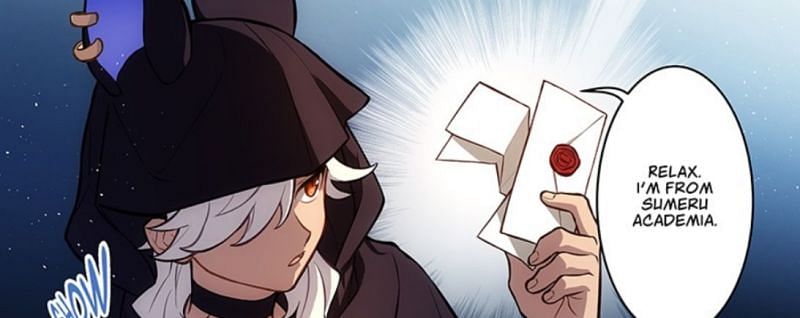
Playing Cyno may be far off in the future, but he has shown up several times throughout the Genshin Impact webtoon. Here’s everything known about Cyno, the student of Sumeru Academia.


Who is Cyno in Genshin Impact?

Cyno (Image via Mihoyo)

Cyno is a student from the Sumeru Academia, a great school of wisdom in the region of Sumeru. Players may not be familiar with the region or its inhabitants, but readers of the Genshin Impact webtoon will be greatly acquainted with its members. In the comic, Cyno is shown aiding his friend Collei, along with wielding powerful magic. In the trailer, Cyno is shown using a spear, while in the webtoon he uses incantations and magic to defend his allies. Sumeru is a desert region, and as such Cyno wears a cloak and light clothing to keep from overheating in the harsh climate. Cyno may have Pyro vision, as the mark on his chest may indicate, but it is hard to tell without a better view.


When will Cyno release in Genshin Impact?

Cyno (Image via Mihoyo)

Not much is known about Sumeru’s release, though it is possible that it may be sooner than players expect. Inazuma is the next region that is expected to release in Genshin Impact, but players who have been completing all the quests of the Windblume Festival may have noticed a scholar from Sumeru appearing in the library. This is due to the fact that Lisa herself graduated from the Sumeru Academia, and as such she is connected to both the region and Cyno. This may be how players will get in contact with Cyno himself.

Also read: Genshin Impact: Klee rerun banner and roadmap for upcoming updates explained


With many updates to come, Genshin Impact is sure to remain a popular game amongst players for many years. Sumeru seems to be a region of wisdom and patience, but hopefully players won’t have to be too patient to meet Cyno in the game.

Also read: Genshin Impact: List of all upcoming characters

Published 01 Apr 2021, 00:07 IST


Source link

The post Everything we know about the character so far appeared first on Chop News.


from Chop News https://ift.tt/3uczxC0

via Blogger https://ift.tt/31zyKif
April 01, 2021 at 05:50AM

A clean initiative – Nation News

A clean initiative – Nation News

Madurai-based Dhan Foundation’s work proves that defunct water bodies can be revived to benefit the farmlands.

A clean initiative - Nation News

Three-year effort: The Kadhiyanur irrigation tank has clear water now

The Kad­hiyanur irr­i­g­a­tion tank in Iravadhanallur stands out for its clean water amid the dry or dirty ponds and water bodies dott­ing Madurai city. “Three years back, you would have only noticed the dirty water; now, it has been desilted and cleaned and provides water to over 50 acres of farmland. Local contribut­ions and the work by the DHAN (Dev­­elopment of Humane Action) Fou­­ndation made this possible,” says M. Sedhuramu, a farmer in Iravadhanallur. The Vayalagam Tankfed Agr­iculture Development Programme (VTADS) is the one that inspired them. “We appr­oa­­ched the Dhan Foundation in 2016. They selected five farmers (three men and two women) and took us to Bengaluru to see a few water bodies which had been revived. Based on our first-hand experience, we devised a plan to desilt the Kadhiyanur tank,” says Sedhuramu.

The Kadhiyanur tank was 9 acres wide, so they first constructed a boundary wall around it. The water for the tank comes from the Chottaithatti canal but with the sewage flowing in en route, the tank was only getting dirty water. The team opted for the Kalvazhai (Canna Indica) plant to desilt the water in a natural, organic manner.

Project executive S. Lokesh says, “The 2-km long stretch of the canal from the border of Iravadhanallur till the tank was widened to 14 feet to enable the water to flow freely. The water hyacinth clogging the flow was also removed.” With the tank desilted, groundwater quality in the locality has also improved. The project cost was a big challe­nge. “It cost us Rs 20 lakh, out of which Rs 18 lakh came from a few other corporates while Rs 2 lakh was raised by the locals,” says Sedhuramu proudly.

“The Dhan Foundation has desi­lted more than 2,000 ponds and 104 water bodies so far,” says N. Venkatesan, VTADS project leader. The VTADS is currently being implemented in all seven states in south India. Locals are involved in the work relating to the removal of encroachments and desilting which not only cuts the cost of the project but also provides jobs.

Source link

The post A clean initiative – Nation News appeared first on Chop News.


from Chop News https://ift.tt/3cGffuy

via Blogger https://ift.tt/2PN5eTu
April 01, 2021 at 05:50AM

U.S. begins testing Moderna’s Covid vaccine booster shots for variant from South Africa

U.S. begins testing Moderna’s Covid vaccine booster shots for variant from South Africa

A nurse draws a Moderna coronavirus disease (COVID-19) vaccine, at East Valley Community Health Center in La Puente, California, March 5, 2021.

Lucy Nicholson | Reuters

The National Institutes of Health has started testing a new coronavirus vaccine from Moderna designed to protect against a problematic variant first found in South Africa, the agency said Wednesday.

The phase one trial, led and funded by the NIH’s National Institute of Allergy and Infectious Diseases, will test how safe and effective the new shot is against the variant — known as B.1.351 — in roughly 210 healthy adults, according to the agency.

The trial, which has already administered some of its first shots, will include approximately 60 adults who participated in Moderna’s original Covid-19 vaccine trials last year, as well as approximately 150 people who haven’t received any Covid-19 vaccine yet, according to a statement.

The returning participants who were given two shots of the original vaccine 28 days apart at varying doses early last year will split up.

Some of them will be given a single booster shot with the new vaccine at a higher dose while some will receive the new vaccine at a lower dose, the statement said. The remaining participants will be offered a booster shot with the original vaccine “as part of a separate clinical trial protocol.”

Researchers will take blood samples from participants throughout the trial that can be tested against other circulating strains of the virus to determine whether the vaccine produces an immune response.

The trial will recruit volunteers in the Atlanta, Cincinnati, Seattle, and Nashville, Tennessee, areas and should be fully enrolled by the end of April, the agency said.

The B.1.351 variant first discovered in South Africa late last year has given scientists more cause for concern compared with other variants. The variant appears to spread easier than the “wild type” original strains, and research indicates it can possibly evade some of the protections generated by therapeutics and vaccines.

So far, there have been 312 Covid-19 cases with the B.1.351 variant identified in the U.S., according to the latest data from the Centers for Disease Control and Prevention.

“Preliminary data show that the COVID-19 vaccines currently available in the United States should provide an adequate degree of protection against SARS-CoV-2 variants,” NIAID Director and White House chief medical advisor Dr. Anthony Fauci said in a statement.

“However, out of an abundance of caution, NIAID has continued its partnership with Moderna to evaluate this variant vaccine candidate should there be a need for an updated vaccine,” Fauci said.

The U.S. Food and Drug Administration has previously said it will expedite the authorization process for the updated vaccines that target the troublesome variants, eliminating the need for lengthy clinical trials.

However, an independent safety monitoring committee will continue to oversee the trials to ensure the shots are safe, the NIH statement said.

Source link

The post U.S. begins testing Moderna’s Covid vaccine booster shots for variant from South Africa appeared first on Chop News.


from Chop News https://ift.tt/3we8tE1

via Blogger https://ift.tt/31Bixce
April 01, 2021 at 05:50AM

Troll asks Rubina Dilaik if her win at Bigg Boss 14 was ‘fixed’ and her reply is enough to shut all the haters up!

Troll asks Rubina Dilaik if her win at Bigg Boss 14 was 'fixed' and her reply is enough to shut all the haters up!

Popular TV actress, Rubina Dilaik recently lifted the winner’s trophy of Bigg Boss 14 and while we saw her fans pouring in love and praises for her on social media, a certain section of audience trolled her and said that she was a fix winner. The actress recently had interaction with fans on Instagram and during that time, we saw a fan asking the same question to the Shakti actress, to which she replied, “I often come across this question, more from trolls asking me whether I’m a fixed winner of BB14. I want to ask you all. Do you’ll think that it is possible in a reality show? In a show like this, viewers have to decide whom to vote for. It depends on that.” Also Read – Bigg Boss 14 winner Rubina Dilaik REACTS to rumours of her participation in Khatron Ke Khiladi 11

The actress also cleared the air on her participation in Khatron Ke Khiladi 11 and said that she will not feature in the current edition. “Not this year maybe because I have taken up Shakti and I will give my full ‘jee jaan’ to the show. Rest, let’s keep it a surprise because I love surprising my fans,” said Rubina. The gorgeous lady is currently giving her 100 per cent to Shakti and while we are fans are happy to see her in their favourite character, lead actor Vivian Dsena has reportedly refused to comeback on the show. Rubina earlier revealed that this season will be quite long and not comprised of only 3-4 episodes. Also Read – Nikki Tamboli asks Rubina Dilaik and Abhinav Shukla about their baby plans; here’s what the Shakti actress has to say

Talking about Bigg Boss 14, Rubina entered the house with husband Abhinav Shukla and their bond was loved by the audience. Popular singer Rahul Vaidya gave tough competition to Rubina Dilaik but emerged as the first runner-up in the show. The controversial reality show also had celebs like Aly Goni, Jasmin Bhasin, Rakhi Sawant and others. Also Read – Rubina Dilaik, Abhinav Shukla join their friends for a mini getaway ahead of Holi — View pics

Stay tuned to BollywoodLife for the latest scoops and updates from Bollywood, Hollywood, South, TV and Web-Series.
Click to join us on Facebook, Twitter, Youtube and Instagram.


// jQuery(window).scroll(function(){ // if (isInView(jQuery('#live-blog-update'))){ // getMoreBlogEntries(); // } // });

$(document).ready(function(){ $('#commentbtn').on("click",function(){ (function(d, s, id) { var js, fjs = d.getElementsByTagName(s)[0]; if (d.getElementById(id)) return; js = d.createElement(s); js.id = id; js.src="https://connect.facebook.net/en_US/sdk.js#xfbml=1&version=v3.0&appId=179720252061082&autoLogAppEvents=1"; fjs.parentNode.insertBefore(js, fjs); }(document, 'script', 'facebook-jssdk'));

$(".cmntbox").toggle(); }); });

Source link

The post Troll asks Rubina Dilaik if her win at Bigg Boss 14 was ‘fixed’ and her reply is enough to shut all the haters up! appeared first on Chop News.


from Chop News https://ift.tt/3sHpBjx

For VC Hans Tung, the personal becomes public in a growing campaign to ‘stop Asian hate’ – TechCrunch

Longtime venture capitalist Hans Tung is a big guy. His size might just be lifesaving.

A first-generation Taiwanese-American who came to the U.S. and to LA specifically in 1984, it was a fraught time for the then 14-year-old. Two years earlier, a 27-year-old, Chinese-American draftsman named Vincent Chin was beaten to death in Detroit by a Chrysler plant supervisor and his stepson, a laid-off autoworker, who reportedly believed that Chin was of Japanese descent and were angry over the growing success of Japan’s auto industry. He was killed the night of his own bachelor party.

Anti-Asian sentiment may have seemed to lessen over the following decades, but it has still remained constant, and Tung as been on the receiving end of it, he says. “Growing up, I faced my share of taunts, of racial epithets, whether it was in California or Boston or New York. I’m fortunate that I’m over 6’4″ tall and weigh more than 200 pounds,” or he might be physically harassed at some point, too.

Tung has never been more mindful of his dimensions than now, with anti-Asian sentiment abruptly worsening last year based on political rhetoric about the coronavirus. “As COVID broke out in China, we knew that Asian Americans would be blamed,” says Tung, who flies back and forth to China routinely for work as a managing director with the cross-border investment firm GGV Capital. “We saw this with SARS, too, but it wasn’t as big a pandemic, so people were being harassed and not killed.”

Anecdotally, Tung believes life is more dangerous right now for Asians in the U.S. based on conversations with friends and family members and the worrisome headlines to emerge of elderly individuals in particular being beaten on the streets of San Francisco and Oakland and on New York subways and outside of Times Square, as happened on Monday when a 65-year-old woman was viscously attacked in a scene that was filmed by an onlooker and has provoked national outrage.

The numbers back him up. From 2019 to 2020, overall hate crime rate declined while hate crimes targeting Asians increased, as first reported by NBC and based on analysis released by the Center for the Study of Hate and Extremism at California State University, San Bernardino. Overall, its examination revealed that while such crimes decreased overall by 7% last year, those targeting Asian people rose by nearly 150%, with the biggest surge in New York, where anti-Asian hate crimes rose from three in 2019 to 28 last year, an 833% increase.

With those numbers seemingly continuing to climb in 2021, Tung and his partners at GGV Capital decided to take action two weeks ago, quickly settling on what they do best, which is to respond to the rising violence with their financial muscle and network. A first step was publicly offering to match $100,000 in donations to organizations that support the AAPI (Asian American and Pacific Islander) communities. GGV’s move was almost immediately matched by other investors and founders eager to help, including Jeremy Liew of Lightspeed Venture Partners and Eric Kim and Chi-Hua Chien of Goodwater Capital, who are also matching up to $100,000 in donations.

Fast-forward and Tung says that 11 days into GGV’s de facto Twitter campaign, roughly $5 million in donations have now been made by more than 175 founders (including Jen Rubio, Stewart Butterfield and Eric Yuan) and members of more than 30 venture firms in a kind of partnership that is “rare to see in the VC community,” Tung notes.

It’s a great start, says Tung, who is among the 15% of Asian-Pacific Islanders who are partners at U.S. venture firms, according to National Venture Capital Association figures.

At the same time, he notes that the problem is ongoing and that more resources — which everyone is sending on an individual basis to a variety of Asian-American community groups that are dealing with a spiking racism and its implications — are needed. Indeed, to help funnel donor interest in the right direction, GGV is recommending at least five organizations whose work it believes to be making an impact. These include Asian Americans Advancing Justice, Red Canary Song, GoFundMe Support the AAPI Community, Stop AAPI Hate and Compassion in Oakland.

Tung takes pains to note that GGV has been active in other campaigns, including AllRaise, the organization that’s bringing more gender equality to investment firms and to the board room. He says that his partners were also highly moved by the Black Lives Matter movement last spring, donating to the NAACP Legal Defense Fund and the Southern Poverty Law Center, among other organizations.

He says that earlier movements — including an effort by investor Ryan Sarver of Redpoint last year to help both front-line workers and restaurant workers by devising a way for donors to “buy” chef-made meals for hospital staff — have been experiences from which he has learned.

One of those lessons is that when something is close enough to one’s heart, it’s worth the risk of being perceived as a “VC who is showing off” if it moves the needle.

In this case, says Tung, “so many of these crimes are treated as individual incidents and not as hate crimes,” which come with more severe penalties, he is determined to raise awareness and visibility into the matter, even if it means making himself more vulnerable about his own experience than he might be fully comfortable.

“When it comes to Asian hate, it’s such a personal matter,” he says.


Source link

The post For VC Hans Tung, the personal becomes public in a growing campaign to ‘stop Asian hate’ – TechCrunch appeared first on Chop News.


from Chop News https://ift.tt/2Pf6ZZL